
Previously On X-Men: ‘Book Of Revelation’ #2 Pulls Off One Of The Best Twists Of The Event
by Austin Gorton
It’s another high floor/low ceiling batch of “Age of Revelation” books in this week’s X-books, with an extra dose of “Age of Apocalypse” remembrance in the form of Jeph Loeb‘s inexplicable X-Men of Apocalypse.
The Last Wolverine #2

By Saladin Ahmed & Edgar Salazar
Heather Hudson recruits Leonard and Nightcrawler to (secretly) kill Wolverine.
- This issue confirms Heather Hudson and Wolverine are married in the future; given Wolverine fell under Revelation’s sway early in the alternate timeline, that happened fast – especially if its meant to be an indication of something that might happen in the future of the “regular” book, where Heather hasn’t shared page time with Wolverine in years.
- Heather references moving Alpha Flight to British Columbia; that was in Alpha Flight #29.
- We get a bit of the “view from the outside” regarding Revelation, with Heather sticking to the “3K released the virus, Revelation just capitalized on it” line (she seemingly doesn’t know the truth). Leonard is also unaware that the virus/Revelation’s territory is expanding, presumably because he’s far enough away from it all. Heather does speak generally about people not knowing that either; certainly, the people we saw in Cloak Or Dagger #1 know it.
- Heather says that Revelation used Wolverine to kill the X-Men; it’s not clear if this is a reference to Age of Revelation Overture and Amazing X-Men #1, or some other event in the past. Whatever it is, its news to Leonard.
- The idea from Laura Kinney: Sabretooth that a healing factor helps ward off mind control is repeated here; again, this has never been the case before.
- Nightcrawler saving Mackenize’s daughter occurred in Uncanny X-Men #6.
- Perhaps no single image captures the disconnect in tone (some intentional, some note) of this event like Heather – looking typically dystopian, with a tattered uniform kitted out with extra straps and puches — standing in the otherwise normal suburban home of Human Nightcrawler.
- The sequence of the jet flying into Revelation territories rendered over a map of North America is fun; big Indiana Jones vibes.

- Whatever Revelation did to Nightcrawler being reversed when he immediately crosses into Revelation territories makes zero sense and is clearly just a matter of plot expediency.
- Cyber turns up, having last appeared in Ahmed’s Wolverine run. He is sporting the gold metal arms of the Adamantine, though it’s not clear if he’s under the Adamantine’s control or Revelation’s (or if he’s just willingly serving Revelation), or if the gold is just part of his overall Seraphim look.
- Cyber shot Nightcrawler in the head in the first issue of Ahmed’s Wolverine run.
- The Muramasa Blade is the sword that kill Wolverine/cut Adamantium introduced in Daniel Way‘s Wolverine run.
Another perfectly fine issue of a series I’m probably enjoying more than most. It’s not entirely clear why Heather wanted to bring Leonard along if her goal was to kill Wolverine (since Leonard would obviously object to that) and the Nightcrawler re-transformation is both dumb and makes the whole “turn him human” pointless in the first place (I get he’s meant to be sacrificing something to go along on the mission, but this isn’t his story and that idea mostly just gets paid lip service). But I still find Leonard’s “aw, shucks” heroism endearing.
Omega Kids #2
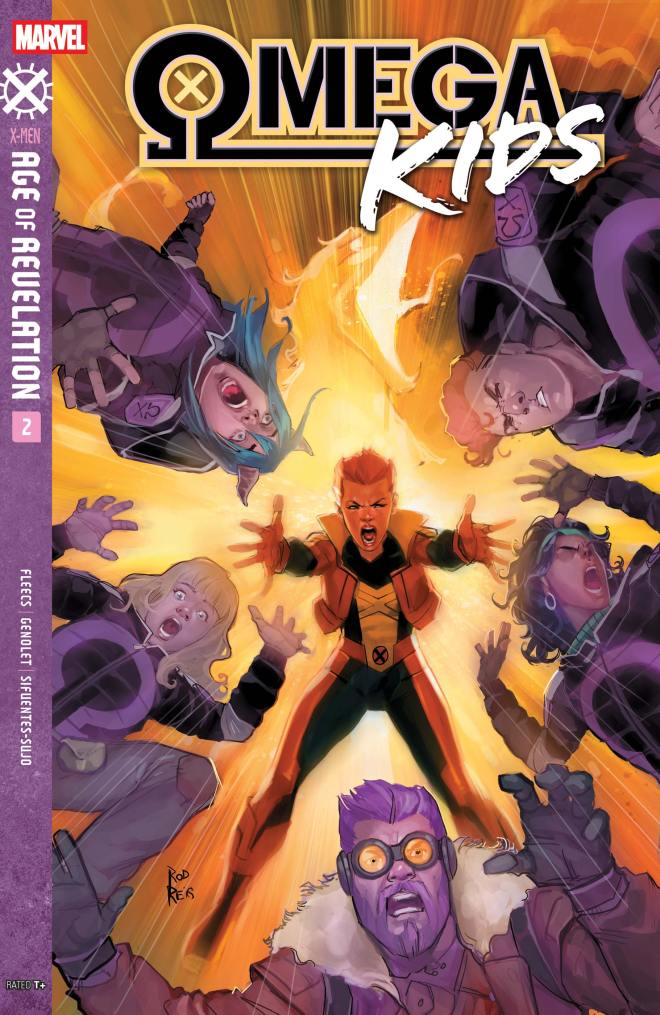
By Tony Fleecs & Andrés Genolet
The Omega Kids target Rachel Summers
- I continue to appreciate the tension between former rebel Kid Omega, his adult self, and his radical charges. Quentin taking a measured approach to potential rebels — acknowledging that people can be grumpy about Revelation without needing to be targeted — is nice to see.
- “What in Doug’s green hell” is a great expletive.
- Rachel having done enough hunting of mutants is a reference to her time as a Hound in the “Days of Future Past” timeline.
- She also refers to her present as a “dystopia future;” how does she know she’s in a dystopia future? It should be the present from her perspective.
- Also, it’s kind of funny how she’s just meant to living an ordinary life, but is still dressed like a superhero.

- Quentin having a normal (for him) conversation with Revelation (calling his kids little weirdos, for example), is also a nice touch in terms of presenting this Quentin as simply an older version of himself (even if that conversation is all a construct).
Radioactive Spider-Man #2

By Joe Kelly & Kev Walker
Spin & Ghost-Spider return to New York to convince Spider-Man to leave.
- This issue seems to suggest the X-virus is techno-organic in nature, which hasn’t really been the case elsewhere. It also makes this the third book (along with X-Vengers and Longshots, plus the Infinity tie-in series) to be dealing with the T-O virus in some form.
- This is also the third book to concern itself with curing the X-virus, along with Iron & Frost and Sinister’s Six.
- And, of course, the New York of this series continues to seem much more dystopian than things are meant to be in Revelation’s territories, according to other books,
- Aunt May constantly talking about how much it sucks to get old highlights the way Spider-Man has gotten noticeably older in the ten year time jump but Aunt May hasn’t, really. Which, granted could be a side-effect of her mutation [Ed Note: Or her apparent but not super clear suspended animation nap?], but is also pretty consistent even in non-alternate reality stories where, if anything, Aunt May has gotten younger over the years as Peter has gotten older.

- For all you parents of young kids out there, this issue features a reunion of the Disney Jr. Spider-Man and His Amazing Friends crew, with Spin and Ghost-Spider popping up. This marks the first time the codename “Spin” for Miles Morales (which originated in that animated series) has been used in a comic (thanks to Spidey superfan/column editor Tony Thornley for sharing that tidbit with me).
- Right as I thinking, “for crying out loud Peter, let the poor woman die!” about Aunt May, it was revealed that Miles and Gwen are in touch to effectively make that argument to Peter so he can get the hell out of town, which, well-played Kelly.
Joe Kelly understands the assignment in terms of telling a three issue story — establish the setting in issue #1, introduce the conflict in issue #2, then (presumably) resolve it in #3. Which is not surprising given Kelly is a seasoned pro. This remains superfluous but entertaining, with Walker’s art a particular highlight.
Unbreakable X-Men #2
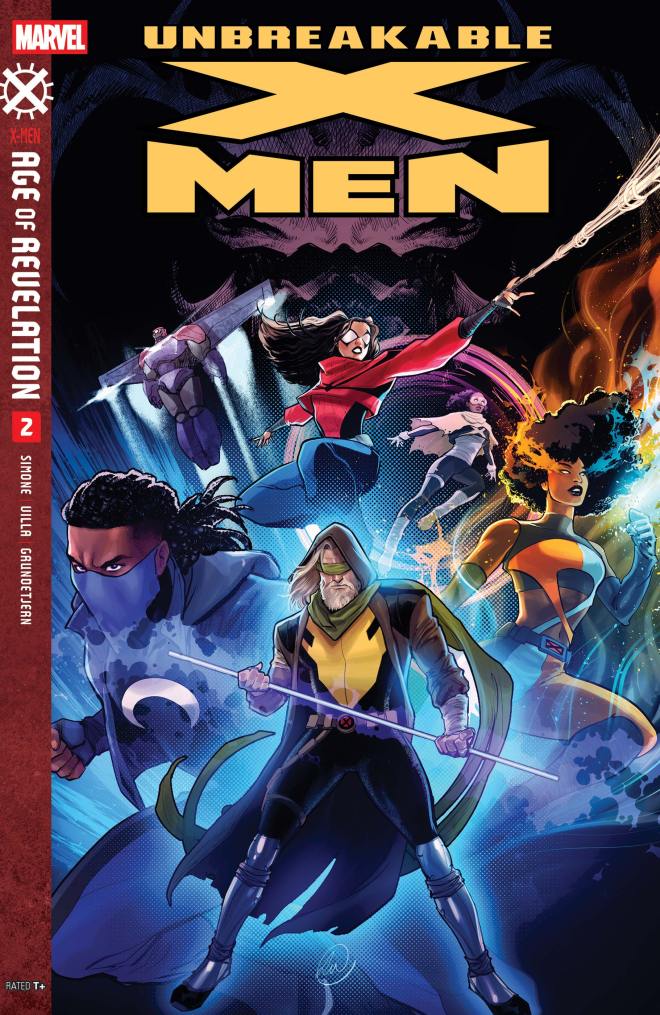
By Gail Simone, CF Villa, Mario Santoro, Davide Tinto, David Marquez, R.B. Silva, Alessandro Cappuccio & Ramon Rosanas
To defeat Shuvahrak, Ransom reunites the Outliers.
- Gambit’s red-eyes being a thing/a defining characteristic for him is something Simone has brought up in the regular series before.
- The Outliers vow to reunite against Shuvahrak has not, as far as I know, been shown on-page yet.
- Dome can apparently teleport as well as create force fields. Sure, why not?
- There’s only been one Outliers/Shuvahrak story to date, so when Ransom references the battle with Man-Thing, that’s the one he’s talking about, from Uncanny X-Men #15-16.
- Deathdream’s appearance here completely contradicts his appearance in Amazing X-Men #1 where, amongst other things, he was hanging around the X-Mansion, not Istanbul, looked the same age as the present, not 10 years older, and died. Maybe the idea here is supposed to be that he resurrected himself after that issue, but then, why Istanbul and why does he suddenly look older (for what it’s worth, Simone said on social media that that Deathdream survived due to his powers and the age thing will be explained).
- Jitter has basically become like Rogue used to be, struggling to deal with the minds/memories of the people whose powers she’s copied.
- Calico comes across as very creepy (evidence that she is the Endling?), as does her herd of Embers.

- Or are we meant to take the idea that Dome is “the last mutant” as evidence that she is the Endling?
- Incidentally, Jubilee, who is usually a cast member of the “regular” version of this book, was once called the last X-Man by Bishop. [Ed. Note: Wait, has Jubilee shown up in AOR at all?!]
- Namor has been called the first mutant before, dating back roughly to the early 90s when the X-Men were hot and associating anything with mutants seemed like an easy way to make sales (the idea was was that while his “water” powers came from his Atlantean mother, his ability to fly came from neither her nor his human father, making him a mutant). The “first” bit has never really made sense in-universe — even back in the 90s, we knew Apocalypse, for example, predated Namor by a lot. Rather, it’s more of a real-world wink at the fact that, appearing in Marvel Comics #1, Namor was Marvel’s first notable character and, at least via retcon, a mutant.
- All that said, aside from the late 00s/early 10s “Utopia” era, Namor has never really hung around the X-Men’s orbit much — he was, for example, deliberately established as staying out of the Krakoa business in House of X/Power of X.
I would love to know why this issue needed seven different artists to complete. On the one hand, seeing how the Outliers have turned out ten years in the future is exactly the sort of thing this kind of alternate story future is good for, and (huge Deathdream snafu aside) it worked (at least if you haven’t been minding Simone’s focus on the Outliers). On the other hand, this still has seemingly nothing to do with Age of Revelation, it’s not at clear if stuff like Dome being the “last mutant” is meant to mean something or is just cryptic nonsense that won’t matter once everything goes back to normal in two months, and the Galactus of it all still seems deeply random.
X-Men: Age of Revelation #3

by Tim Seeley & Phillip Sevy
Doug helps Cable defeat the One World Church.
- This issue makes explicit the parallel setup in the first issue between Doug and Kurch – two people looking to use a virus to enforce their vision on the world.
- As an old school New Mutants fan and someone who likes metatextual elements get integrated into the text, I appreciate Doug’s ruminations on how things may have turned out differently for him if he’d survived to see Cable’s arrival in the New Mutants lives.
- Kid Quetzala being a giant lizard woman without the Facade virus is an effective illustration of how the virus works (even if the specific mechanics of how a virus could change someone physically to that degree is still comics mumbo-jumbo).
- That old New Mutants pinup is back.

- Doug loosing the T-O virus on Cable sets up Cable’s appearance in UnDeadpool (which Seeley also writes).
- The cavalier way Doug dispatches Kurch and Cable makes it clear he’s already crossed over into villainy as of one year into the future.
There’s little tension to the story – Doug ends the threat of Kurch handily — but I like the idea of pairing up Doug and Cable precisely because they have so little history together despite just missing one another back in the day, as well as the way Seeley underscores the parallels between Doug and Kurch, making the former feel like a bigger deal and the latter more of jobber in the process.
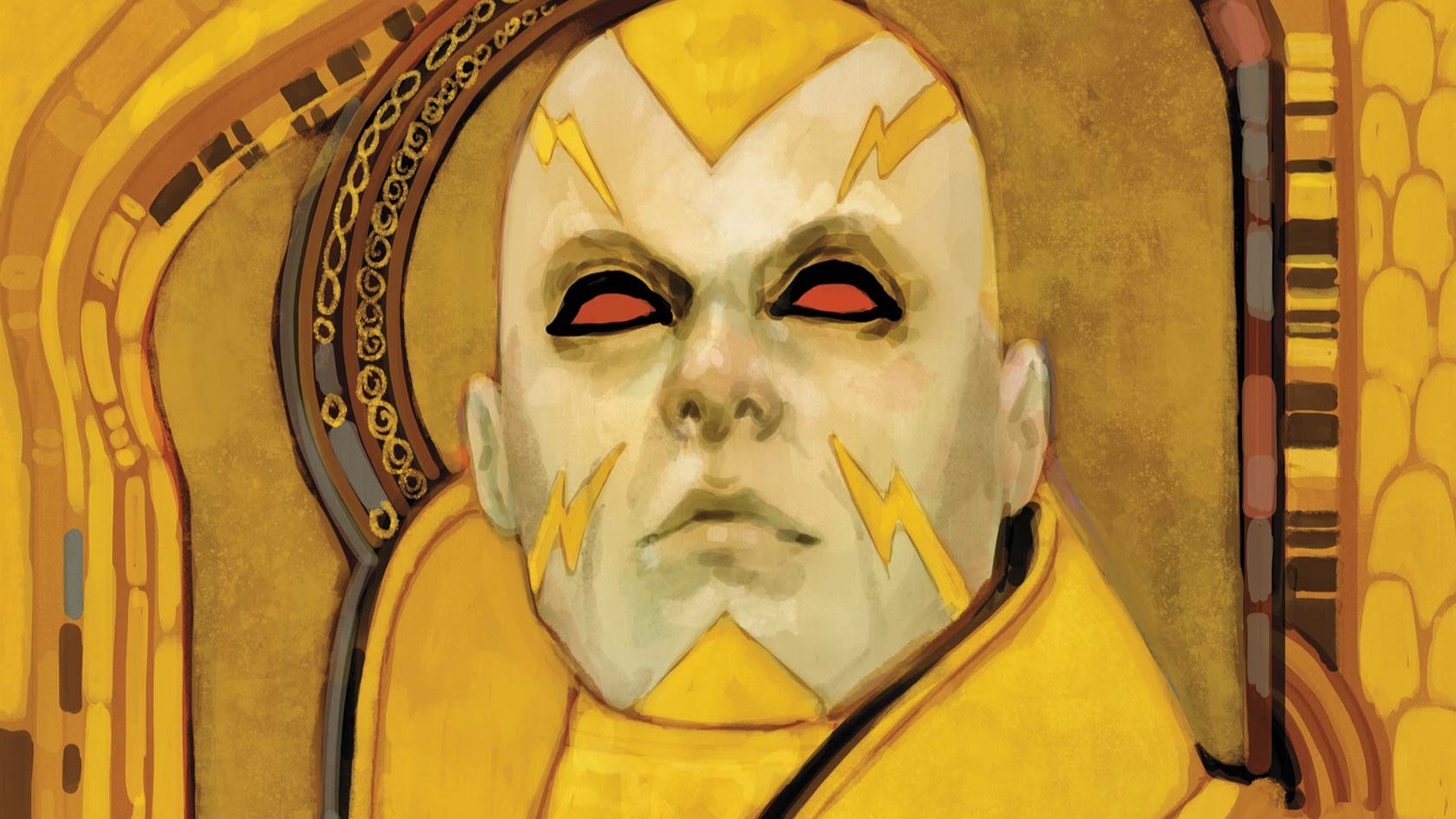
X-Men: Book of Revelation #2 – Book of the Week

By Jed MacKay & Netho Diaz
The truth about Elbecca is revealed.
- It remains unclear if Kitty is aware that Revelation released the X-Virus or not; she’s repeating the official story to Elbecca here.
- Kitty acknowledging her history as a friend of Doug Ramsey before he even became a New Mutant is, surprisingly, not something that has come up much recently.
- While Revelation is responsible for Kitty’s ghost-like state, she faced a similar situation after being enjoyed in the Morlock Massacre back in the 80s, with the original Fantastic Four vs. X-Men miniseries chiefly centered on efforts to stop Kitty from being stuck in an incorporeal form and fading away into nothingness.
- The sequence of Cortez having setup Topaz to be assassinated by Glob, only for Revelation to blame — and kill — Bei, with Bei both correctly denying to Psylocke in Age of Revelation – Overture she had anything to do with that death and also working against Revelation, is one of the better executed reveals in this entire event.

- Kitty’s “gonna kill Revelation” attire is her Shadowkat suit from the “Fall of the House of X.”
- I guess we have to assume that Revelation and his Choristers appeared in Sinister’s Six #2 (and presumably #3) between pages 16 and 17 of this story, since Cortez dies after that.
- The twist that Elbecca isn’t a naive young girl overwhelmed by the machinations of the people around her but an Arakki sleeper agent sent to destabilize Revelation’s power base ahead of Apocalypse’s return is both genuinely surprising and a lot of fun.
Diaz’s extra grid effects remain bafflingly-distracting, and this might be the one “Age of Revelation” series that could use MORE issues — I’d love to see more of Kitty’s perspective on what her old friend has become, and more space between Cortez’s downfall and the Elbecca reveal. But the various reveals in this issue are still fun, and particularly in this event, I’ll take “fast paced” over “drawn out.”
X-Men Of Apocalypse #1

By Jeph Loeb & Simone Di Meo
The X-Men from the Age of Apocalypse battle the regular X-Men.
- But really, this is issue #2, since it pickups directly from the previous Alpha issue.
- Nate Grey says that he’s the only person who crossed over from the Age of Apocalypse; that sets this early in his time on Earth-616, as he meets Dark Beast not long after arriving.
- That said, it’s not at all clear why he’s in earshot of the X-Mansion, when he was bumming around Europe in the early post-AoA issues of his series which Loeb himself wrote.
- Morph is able to encase Gambit in a bubble made out of his…lips? I guess that works, but seems like different deployment of his powers than we usually see.

- Wolverine is living on the grounds of the X-Mansion following the events of Wolverine #90 (the last issue before Age of Apocalypse began), when he was pushed into (seemingly) killing Sabretooth in the wake of a general “becoming more feral” move after losing his adamantium skeleton in “Fatal Attractions”; as a result, he no longer trusts himself to be around the X-Men.
- Storm, Cyclops, and Bishop’s looks have all been slightly tweaked by Di Meo for some reason (I’m all for artistic license, but don’t do a story set in a specific era if the artist can’t/won’t mimic the looks of the characters at that time).
- Gambit’s dialogue is horribly phonetic here — “even if ‘e’s t’ very reason we’re ‘ere” — even by, say, Claremontian standards. Also, if you read that as written it sounds like…no one’s actual accent anywhere?
- Regular Gambit’s kiss with Rogue came in X-Men (vol. 2) #41, as reality ended.
- Loeb at least has Nate Grey wipe everyone’s memories of the events of this issue, which explains why no one mentions when they later meet Nate or learn of the continued existence of the Age of Apocalypse.
- Sabretooth says he remembers Nate; it feels like if the two ever crossed paths, it would have had to have been in X-Men: Omega, and while I don’t remember them meeting, I’m not going to go look it up, and based on last issue, just assume Loeb is once again incorrect about the history of the event to which he contributed.
- The closing pages of the issue take place in the opening panels of X-Men #1.
To say this is better than the previous issue says more about the low-quality of that issue than the high quality of this one, but I can’t argue it’s fun to see the AoA X-Men face off against the regular X-Men. Beyond that, this still feels like an utterly-pointless and sloppy time-hop story that is more or less doing the same thing as the Giant-Size mini-event earlier this year.
