
Discovering ‘Veronica Mars’ In 2026
by Tito W. James
I discovered Veronica Mars when the Netflix algorithm insisted, “We think you’ll love this.” To which I responded “Okay, Algo, if I’m not hooked within the first five minutes, I’m removing it from my watchlist and will banish the series to content purgatory.” That was a long preamble to me falling brain-over-butt in love with the series.
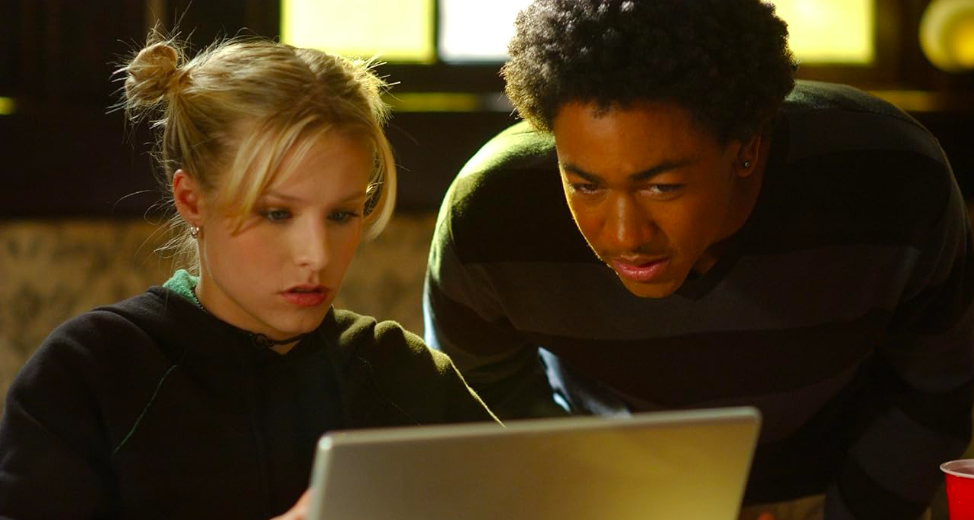
As it begins, the program follows Veronica Mars (Kristen Bell), the 17-year-old daughter of a private detective who’s really the brains behind their private investigation business. At school, she has a reputation for solving mysteries and fixing problems. However, Veronica’s cavalier attitude towards her aptitudes masks deep-seated personal trauma. The fulcrum for the first season: uncovering the true identity of the person who murdered Veronica’s best friend, Lilly Kane (Amanda Seyfried).

Now that I’ve covered the basic premise, I’d like to dive into the strengths and weaknesses of the series. As someone who grew up during the 2000s, I thoroughly enjoyed the music, fashion, and pop-culture references. My favorite episode involves Veronica going “undercover” as a “Japanimation”-inspired gamer girl.
Additionally, Veronica Mars is both a pleasant nostalgia trip and way ahead of its time. The series deals openly with wealth inequality, white privilege, and sexual misconduct in ways that feel raw and true to the characters and world.
All of the characters are consistently well-written and are more than they first appear. While Veronica is the star of the show, I was equally invested in the exploits of Wallace (Percy Daggs III), Logan (Jason Dohring), and Weevil (Francis Capra). The first season is damn near perfect, expertly weaving together multiple mysteries for an explosive season finale.

While I have doted on that debut run, Season 2 was released during the 2007 writers strike and the quality noticeably suffers. It has its moments and seeing a pre-Thor Tessa Thompson is a blast. But, the finale is a huge downgrade that undermines the first season’s plot.
Season 3 course-corrects and it’s fun to see Veronica and the supporting cast enter college. While not bad, it feels like it’s trying to recapture the magic of the first year. Its final episode is fun and charming, but ends rather anticlimactically. Viewers who followed the series as it originally aired know that it ended prematurely.

Season 4 has original showrunner Rob Thomas reuniting the cast for a final season with high production values. He also throws the gauntlet down to deliver his definitive statement on Veronica Mars as a character and as a TV series. The show concludes in a way that’s sure to surprise viewers but feels true to the ethos of the character. For viewers who only want peak TV, I would recommend just watching Seasons 1 and 4.
Twenty years later, Veronica Mars remains a thrilling, entertaining, and provocative TV show that’s well worth your time. There’s always been a desire for well written female characters, and Veronica Mars is one of the greats!
All four seasons of Veronica Mars are streaming on Netflix and Hulu.


