
Characterization In The Buffyverse — ‘Buffy The Vampire Slayer’ Season 5, Episode 17
by Benjamin Hall
This is part of a bi-weekly series concerning the characterization of Buffyverse characters. Arguably the best place to begin reading this series is at the beginning, but that is up to each reader. As a reminder this column will cover major and some minor characters from the shows Buffy The Vampire Slayer (1997-2003) and Angel (1999-2004). Other Buffyverse media, such as the graphic novel Spike: Into The Light (2014) are not pertinent to this series. Also there will be no referencing real world events that have direct relation to either show in this bi-weekly series. Although this series does reference things that have no direct relation to the show in order to examine things such as metaphors and literary analogues.

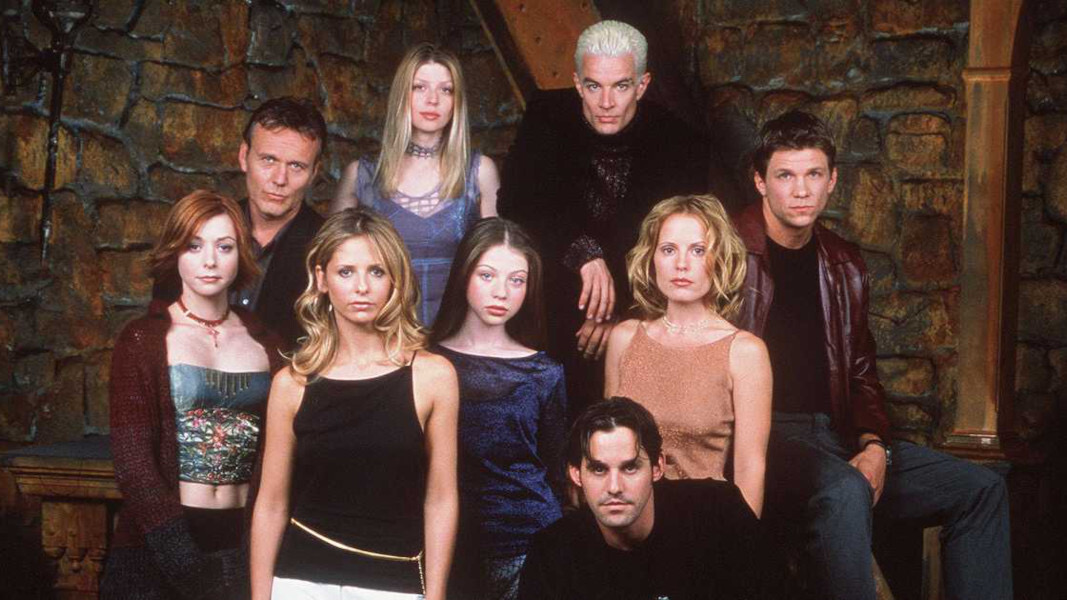
This week: Buffy Summers (Sarah Michelle Gellar) and Dawn Summers (Michelle Trachtenberg) continue to struggle with the passing of their mother, Joyce Summers (Kristine Sutherland). Meanwhile, Spike (James Marsters) attempts to help the sisters.
(Warning of spoilers from this point on!)
(Trigger warning for talk of manipulation)
Willow Rosenberg (Alyson Hannigan) using magic to pull out the book for Dawn highlights two things while suggesting another. Willow’s lack of training is continually making her irresponsible with magic, and she is still horrible with dealing with loss (Season 4, Episode 6, “Wild at Heart”). As for the suggestion: since she knows about the resurrection spell contained in the book, she has probably thought it could be useful in the future. Pointing toward the book ends up resulting in danger for Dawn and Spike, plus more trauma for Dawn and Buffy. Additionally, it takes a small amount of agency away from Dawn since she does not look for a spell on her own.
Rupert Giles (Anthony Stewart Head) decides to mourn Joyce while listening to music from their time together while re-experiencing their youthful personalities (Season 3, Episode 6, “Band Candy”). This moment suggests deeper feelings for her. It also implies he has regrets about their past — with a particular one being the missed chance at a real romance. Giles also acts like a parent to Buffy by helping guide her through the funeral arrangements and their respective costs. When it comes to Dawn, he tries to be understanding of her feelings by allowing her to do work at his store. Although some might argue this is not parental concern, one has to admit it is at least consideration.
Xander Harris (Nicholas Brendon) and Willow apparently do not mention the flowers Spike leaves or his intentions to Buffy. This makes the scene irrelevant since there is no followthrough. It also makes Xander and Willow seem like bad friends to Buffy and Dawn since they fail to mention that Joyce has another mourner. Also, Xander comes off as chauvinistic about Buffy — as if she has no mind of her own — when talking about her with Spike. Freaking out over the idea of having babies is understandable since the conversation comes up in an abrupt manner. Yet, this suggests his commitment issues as well, specifically the ones to be explored next season (Season 6, Episode 16, “Hell’s Bells”).
Anya (Emma Caulfield Ford) is dealing with the grief in a more realistically adult way by focusing on a more hopeful future. That said, her sudden realization about sexual activity appears at odds with her age and the amount of life experience she should have.
Tara Maclay’s (Amber Benson) resistance to resurrecting Joyce, or anyone else, with magic is something that she is very firm on. Nevertheless, she will, for some reason, go along with the plan to “save” Buffy after the slayer’s passing (Season 6, Episode 1, “Bargaining, Part One”). Thus, either she loses some morals between the seasons or Willow convinces her. No matter the reasoning, Tara at least understands consequences exist in their universe, whereas Willow does not. This understanding — plus Willow’s actions here — will contribute to their first fight as a couple (Season 5, Episode 19, “Tough Love”).
Buffy displays an inability to face her grief, especially in front of Dawn. Besides trying to escape it with different tasks, she also attempts to rekindle a physical relationship with Angel (David Boreanaz).
Dawn acts bratty throughout. She also lacks an understanding of natural death and the grieving process. This is despite having memory implants that should cover several events from the previous four seasons. Therefore, she should have lost friends and family in the past, and this would conceivably fast-track her maturity on the matter. Unfortunately, this is what can happen when characters are put into franchises via retcon without enough thought to how it affects everything, including them. On the plus side: she comes to an understanding regarding death and grief by the end.
Spike displays his loyalty to the Summers family by trying to exhibit respect to Joyce’s memory and protecting Dawn. Later revelations about his mother will affect how some viewers view his reasoning in assisting Dawn (Season 7, Episode 17, “Lies My Parents Told Me”), though.
Doc (Joel Grey) comes off as a weird, old man demon who is more than he seems. He also appears to notice more about Dawn than is on the surface.
Jinx (Troy T. Blendell) moves the main narrative through-line forward by questioning Benjamin Wilkinson (Charlie Weber) and getting lucky in doing so. He also fast-forwards the over-arching plot by revealing the information to Glory (Claire Kramer), and thus he is an effective plot device.
Murk (Todd Duffy) makes his first appearance here. He only gives reassurance to Glory, so he is just helping set-up the scene.
Ben and Glory see reference to their connection as being that of “siblings.” This implies that he may be older than he looks despite his mortal nature. By accidentally giving up information about the key, the story suggests he does not consider using forgetting spells on himself, or possibly on the minions. The fact that he does not finish killing Jinx — or removing Jinx’s ability to communicate with Glory — makes Ben a puppet to the whims of the plot. Glory, meanwhile, fails to grow much in this episode beyond pointing out that the key’s hiding place is less than obscure. In that, though, she definitely has a moment of brilliance.
The funeral director (Alan Henry Brown), the customer (Andrea Gall), the minister (Darius Dudley), the lady with a rosary (Noor Shic) and the lady with baby (Annie Talbot) seemingly have no substance even as stock characters. Seeing as these individuals are lacking a clear purpose, one can argue that they need not exist.
Angel essentially has no good reason for showing up in Sunnydale in relation to Joyce’s passing. This is especially true as there is no connection between the two except his interest in her eldest daughter. His presence also does little to move the episode’s narrative forward by a wide enough margin. Thus, a simple phone call would be sufficient and more reasonable. Also, emotions get heavy whenever he and Buffy meet and part ways (Angel Season 1, Episode 19, “Sanctuary”). Last but not least: Angel’s presence manipulatively teases shippers of the two while negatively affecting Buffy mentally and emotionally.
This episode takes the trauma the prior episode (Season 5, Episode 16, “The Body”) probably evokes in a viewer and compounds the matter. Nevertheless, there is at least some character growth within the ranks of both the protagonists and antagonists.

