
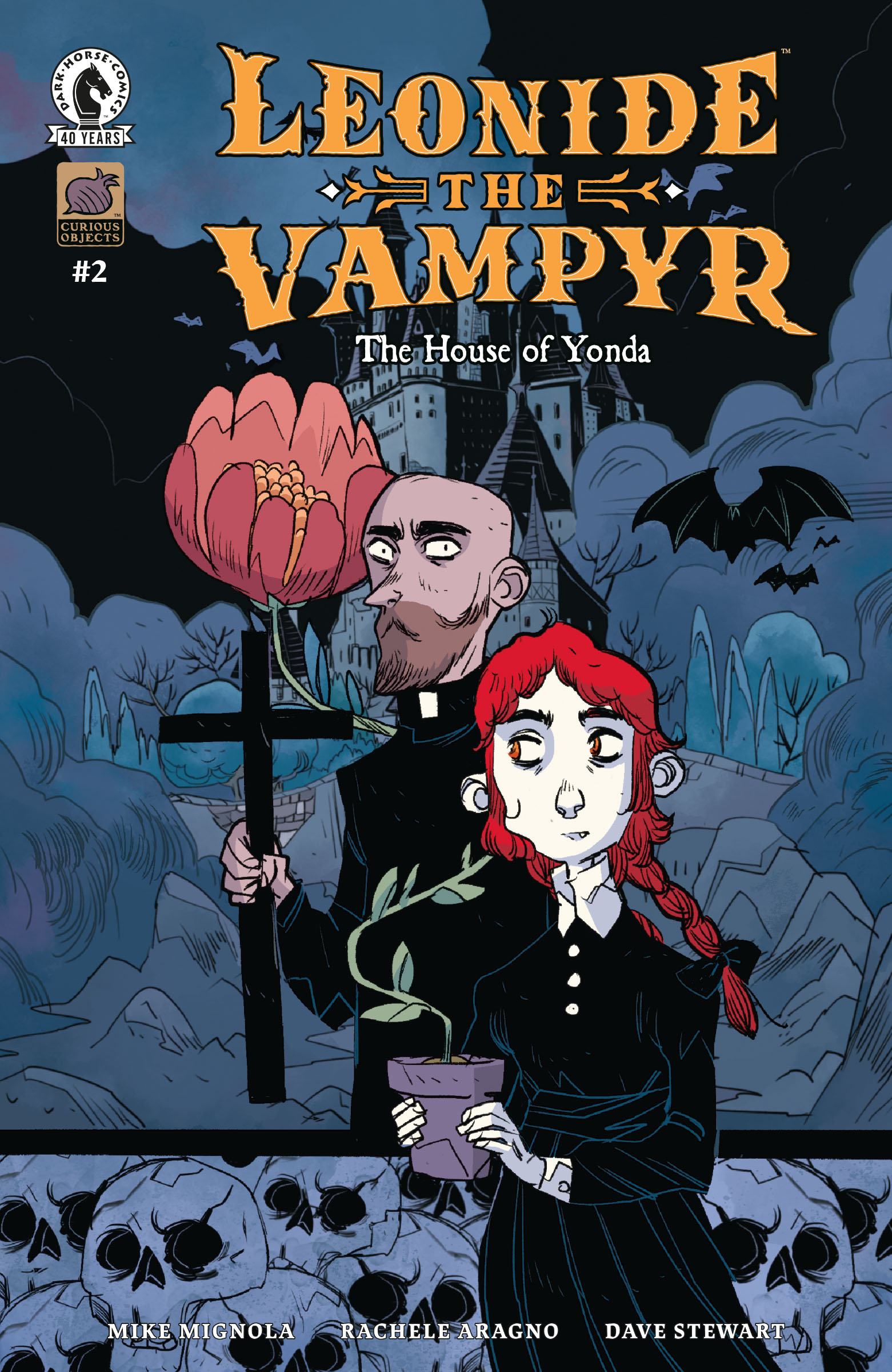
Review — ‘Leonide The Vampyr: The House of Yonda #2’ Resurrects Gothic Romance
by Anton Kromoff
Summary
Leonide the Vampyr is very much in the spirit of classic goth poetry wrapped in some truly stylish art.
Overall
9/10Welcome to the table,
Mike Mignola is one of my favorite storytellers, and I’ve been really taken with the art that Rachele Aragno is creating. Those factors, combined with the colors from Dave Stewart and the always-epic lettering from Clem Robins, led to a second issue that, surprisingly, surpassed the first. I’m talking about Leonide The Vampyr: The House of Yonda.
Now let’s get into it.

This book looks great, both the first 3/4ths Aragno crafts and the last few pages Mignola himself lends his skills to. The story itself is a bit ephemeral, feeling a bit more like a poem out of verse clad in the romantic-gothic trappings of the likes of Edgar Allan Poe, Christina Rossetti, and Lord Byron.

The plot of this second issue follows our lovestruck young Doctor as he realizes the titular Leonide is more than likely from a diabolical family. He returns home from his research after having visions of Leonide and finds his mother has “watered” the strange plant found in the first issue with her own blood, giving her life to see the odd offering bloom.

The Doctor decides he shall be happy in the darkness and goes to marry himself to the grave, seeking out the castle where he believes Leonide to be dwelling. This is a very dream-like journey from page to page with some beautifully colored landscapes, and this ever-present large pink flower that his mother fed with her lifeblood.

Eventually, The Doctor finds himself in a small village on the outskirts of the hills, where Castle Yonda once stood. While there, he meets a priest who tries to dissuade him from continuing his journey, but as is the nature of most love-struck youths, he will not be distracted from his goal.

The issue takes a really cool stylistic split between the narrative dialogue and the visuals. The Priest is going through his religious pleas to whatever god he serves, while The Doctor continues on into the mountains, finding a castle that he was told was no longer there. From there, the priest prattles on in the narrative while the pinks turn to cooler tones, and we see a castle whose halls are filled with paintings of fampieric and fiendish family members, including Leonide.

From there, the plant is dropped, the pot it is in shatters, and the pink clouds that come out of it seem to reveal not only Leonide, but a large collection of her family.
From there, a wedding occurs, while The Priest is shown to stiffen his resolve and head towards the castle, meaning to save or condemn (whatever priests do when they think they know best).

As The Priest arrives at the castle, the nuptials seem to solidify for The Doctor and Leonide. A burst of amber light shifts the art from Aragno’s to Mignola’s reveling a haunting hedge that looks very much like vines wrapped around The Doctor and Leonide. They’re accompanied by two bats, seemingly an indication that they have both transmigrated the confines of death once more and are free to flap around with each other in the mountains.
The book is very light on story. I don’t think that works against it, though, as it feels very much in the spirit of classic goth poetry wrapped in some truly stylish art.
If you dig these sorts of things, you should totally check this book out.
Until next time, I want more Vampire comics.

