
Hope Is The Only Weapon We Have — Discussing ‘Welcome To Hell’ With Creator Mohammad Sabaaneh
by Tom Smithyman
The focus in the Middle East may have shifted to the war again Iran, but a new graphic novel shows the horrors from the recent Israel-Palestinian conflict. Mohammad Sabaaneh, the principal cartoonist for the Palestinian Authority’s daily newspaper Al-Hayat al-Jadida, was traveling back home to Gaza with his brother Thamer in October 2023 when the heard about the Palestinian attacks on Israel.
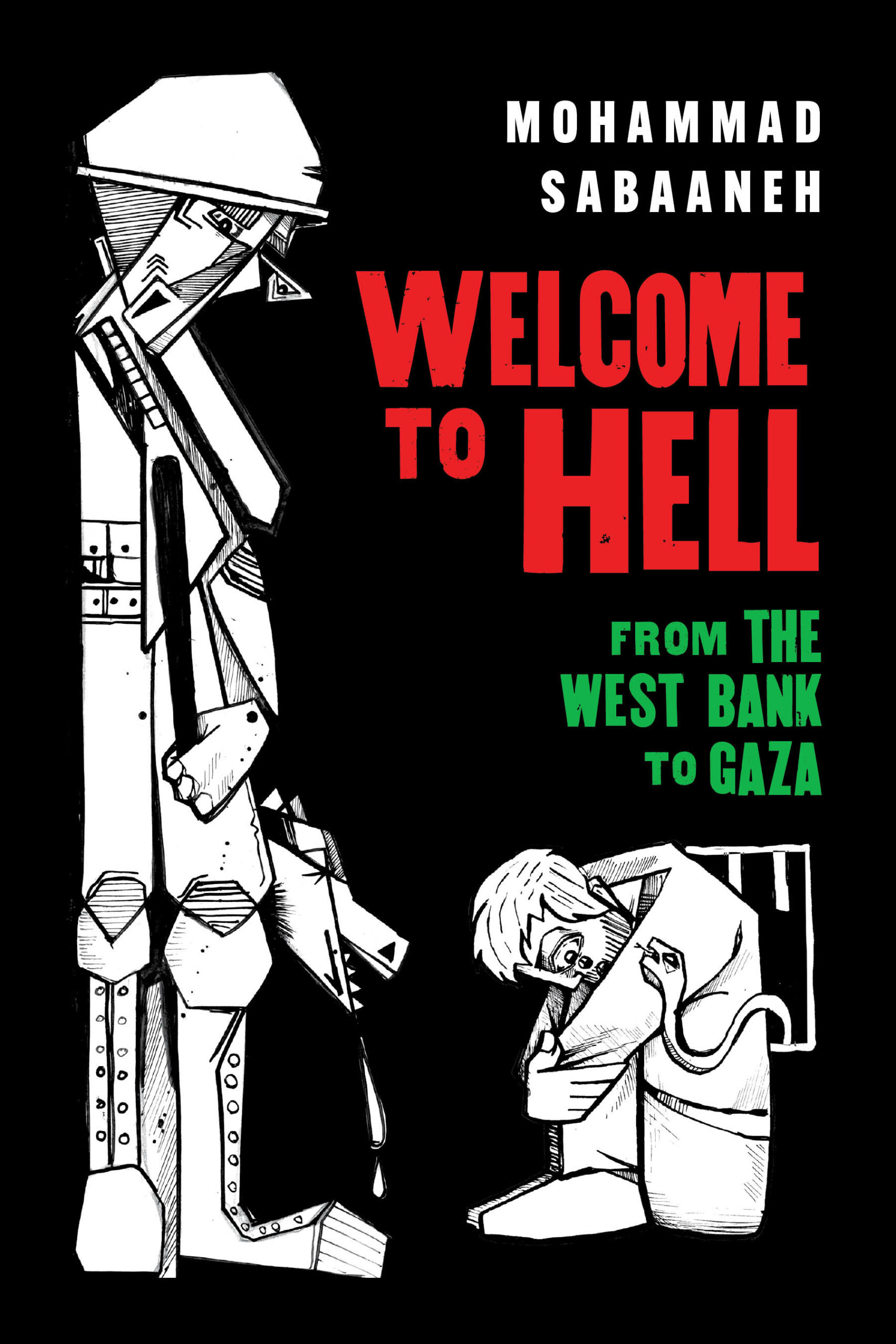
They were arrested by Israel and subjected to horrific conditions, which Sabaaneh explores in his graphic novel Welcome to Hell, which will be available June 16th from Street Noise Books. Comicon.com caught up with Sabaaneh to discuss his approach to the emotional material and what readers should take away from the book.

Tom Smithyman: The book is incredibly powerful, frightening beyond belief, and still somewhat hopeful. How did you manage that balance while keeping your own emotions in check while you were writing and illustrating it?
Mohammad Sabaaneh: Hope is truly the only weapon Palestinians possess. During my time in prison, I got to know many Palestinian prisoners. People who had spent long years in occupation jails, yet they had great hope that one day they would be free and leave that prison. I wondered, where do our prisoners, the Palestinian prisoners, get this hope from? But I discovered that hope is the only weapon we have as Palestinians. I believe that if it weren’t for hope, Palestinians would have faded away, and their cause would have vanished many years ago.
But the presence of hope is the weapon that keeps our cause alive, keeps us resilient on this land, and enables us to resist the occupation and its tools. So, my focus on hope, and the presence of hope in my texts, even if it’s minimal, is something necessary and real. It is not manufactured for the text or the story, nor is it created to maintain a balance with tragedy within the narrative. No, hope exists, and I convey it as I see it.

Smithyman: The scenes in the prison are some of the most horrific, featuring scenes of sexual assault, random beatings, and humiliation. How is your brother doing today after being exposed to that kind of torture?
Sabaaneh: My brother is currently outside occupation prisons, but unfortunately, his eldest son has been detained administratively and is now inside the occupation prisons. His son’s name is Watan, which means “homeland.” So, you can imagine how the father feels knowing what his son is going through, the tragedy, the beatings, the torture.
And yet my brother lives on, maintaining his steadfastness and hope. Recently, my brother underwent laser eye surgery to get rid of his glasses, so that even if he is detained again in the future and is beaten, as the occupation guards did in this book, he will be able to live without glasses. Imagine that a person like him must always think about how to adapt inside occupation prisons, under these circumstances.
So, yes, my brother is outside the occupation prisons, but he is preparing himself, just in case, for any future arrest. It’s not easy for him to live this life, it’s not easy for any of us, as Palestinians, to live this life. But this is the reality we live in, unfortunately.

Smithyman: Your artwork is stunning. You don’t stick to a single style, instead moving from cubist to inkwash to even more abstract styles. Is that something you planned in advance while plotting out the book, or did you just let the spirit move you when you came to a certain panel?
Sabaaneh: I move between styles. I don’t know if this is a positive or negative thing, but I know that I move between several styles when I produce any artwork. And that’s not completely intentional. As a Palestinian artist, I find that I don’t have much time to experiment and research and so on, but I have a constant obsession with producing. So I sometimes experiment while I am producing the artwork.
As any artist around the world, I want to experiment, I want to innovate and try new styles. Unfortunately, in Palestine, we don’t have the space or the tools to experiment. I am luckier than a lot of Palestinians, as I have the opportunity to travel. So, most of the tools I buy — the ink, the pens, the brushes — I buy while traveling outside the country. And when I produce a piece of artwork, I experiment with these tools and these methods.
True, I appreciate the Cubism school, but I also want to experiment with other forms of lines and shapes and figures. You will see a very different style in Power Born of Dreams, which I did while studying for my master’s degree in the UK. The art for this book was done using linoleum block printing. And this book, by the way, is considered to be the first Palestinian graphic novel to come from Palestine.

Smithyman: Besides exposure to what really happened in Gaza, what do you want readers to take away from Welcome to Hell?
Sabaaneh: The most important thing about this book, for the readers, but also for me personally, and for Palestinians, is that this form of art helps to get rid of the trauma we experience because of the existence of occupation prisons and what happens there. Truly, what happened with my brother Thamer was a very traumatic thing, and when he told me about it, I felt fear and terror. And that’s what the occupation wants. They want to make these prisons tombs for the living, and for us all to feel this form of fear and terror, suppressing Palestinians and their despair, and preventing us from fighting in any way.
So, I, personally, needed to get out of this trauma, to leave it by talking about it, and about what I heard. This enables me to be a normal human being, able to exist within the difficult situation we live in and living with the possibility that every Palestinian could be a prisoner.
I don’t expect readers around the world to be able to imagine that this text is true, or that these are the circumstances we live in, or that this is the reality we experience. I understand that it must be hard to believe that there could be humans living under these conditions and going through these difficult circumstances. So, I wanted to share these things with the public so they can know exactly what Palestinians go through and how their daily life is, in the West Bank and in the Gaza Strip. The scenes I share from the Gaza Strip seek to convey that, despite all the evidence, despite everything they go through, that there is a smile or laugh.
And by the way, the occupation itself wants Palestinians to know what happens in occupation prisons. In 1948, when the occupation was committing massacres in Palestinian villages, it always sought to spread the news of these massacres through Palestinians, so that the Palestinians would flee their villages and migrate. It is a way to terrorize, and to make Palestinians leave their land. But what I am trying to do is to convey this information to the global audience, to share the real picture of the Israeli occupation, and how it treats Palestinians despite all human rights agreements, and despite all international agreements around the treatment of prisoners of war.
Palestinians in occupation prisons are prisoners of war. They should be considered such under international law. And from my point of view, given that they are detained under the administrative detention policy, a policy where a Palestinian can be detained without any legal reason, or without any legal process, without a trial or reason for detainment, people held in occupation detention centers can be considered kidnap victims, or hostages, and as such, should be released under international law.

Smithyman: Is there a path to long-lasting peace between Palestine and Israel, or will we continue to see this kind of barbarity for the foreseeable future?
Sabaaneh: Always when talking with the press, we are asked this question: what do you think of the peace process? What do you think of the proposed solutions for the peace process? Is there hope or not? Hope is always present, but not only for peace. Hope for Palestinians to get their human rights. I believe that our priority today, as Palestinians, should be not just to live in peace as the international community wants, and as everyone wants. But our priority, as Palestinians, is to get our rights as human beings, to live on our land in peace and after obtaining our full rights.
It is not necessarily enough today to just talk about peace. We must talk about the rights of Palestinians recognized by all international charters, to live in greater security. Today, settlers are attacking our homes and our villages. They are in the streets, armed by the Israeli government, with weapons, equipment, and under the protection of the Israeli army. The priority should be the security of Palestinians today, and for Palestinians to gain the ability to live on their land, like any other human being around the world. So many proposed international agreements and international solutions do not help the Palestinians with daily life.
Smithyman: Thank you for talking about such a difficult subject. Best of luck to you and your family.


