
Snap Into Marvel: ‘Spider-Man Brand New Day’ Swings Into Snap
by Austin Gorton
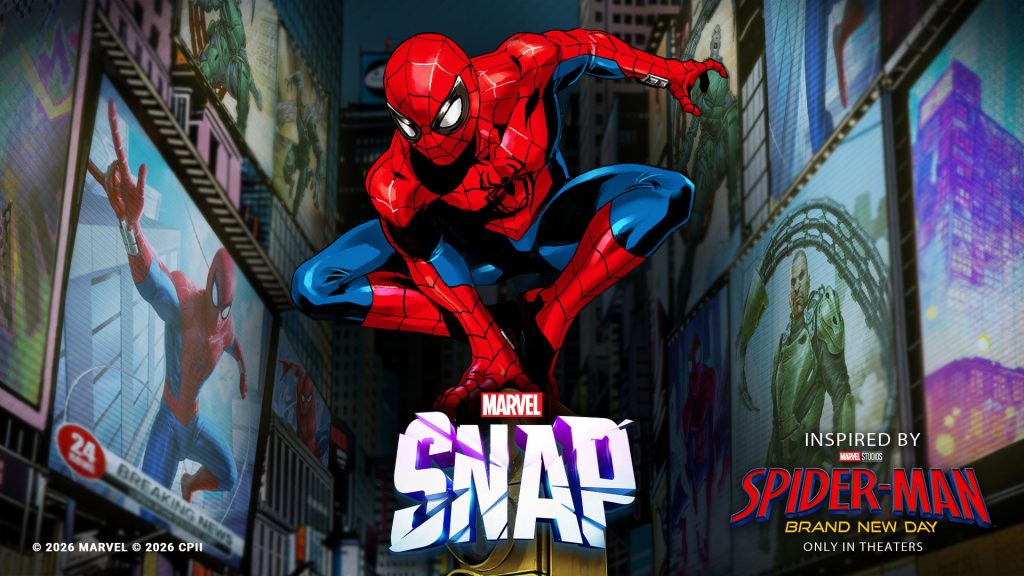
Following the summer-themed and mostly “original” Marvel Beach Bash season, Marvel Snap returns to Marvel Cinematic Universe synergy with Spider-Man: Brand New Day. Given this is a tie-in to the upcoming film of the same name, it also features a return of the “existing character, with movie design” card design technique, offering up new versions of old characters inspired by the character’s cinematic counterparts. And given this is a Spider-Man-centric season, we can likely also expect some buffs to some old Move favorites as Second Dinner continues their relentless agenda to keep pushing the Move agenda towards some unknown level of meta relevance.

This season’s batch of new cards also features one of my favorite card creation trends: supporting characters! Following in the footsteps of Uncle Ben and Karen Page, Spider-Man: Brand New Day delivers Aunt May and Mary Jane (and J. Jonah Jameson) into the game. It also gives us what is, I believe, the game’s first “team” card, in the form of the Sinister Six.
While Marvel Snap has experimented with team-based synergy (as opposed to the typical card ability synergy) occasionally, the idea of adding a card dedicated to a collection of characters not only offers the possibility of a fun new avenue for gameplay, it also speaks to the “trading card” aspect of the game, with Team cards a staple of the old Marvel Universe trading card sets.
Starting with this season, I’m going to take a different approach with this column. Rather than rank each card, I’ll provide a little bit of comic book (or MCU) background for each, and discuss how the card ability speaks (or doesn’t) to the character’s comic book history or place in Marvel Snap. And without further ado, here are the new Spider-Man: Brand New Day cards:

Spider-Man Brand New Day: This is ostensibly a MCU version of Spider-Man, akin to the likes of The Fantastic Four: First Steps Invisible Woman, Mister Fantastic, etc. While previous iterations of the MCU Spider-Man were subtly different in appearance from the classic comic book look, by this fourth outing in the MCU, Spidey’s movie costume more or less resembles the original red-and-blues, so this card just looks like … a regular Spider-Man card. And of course, being that the Spider-Man family of characters are, more often than not, part of the Move archetype, that’s where this card lands as well.
Mary Jane: Making her first full appearance in Amazing Spider-Man #42 (August 1966) via one of the most iconic introductions of all time (“Face it, tiger. You just hit the jackpot“), Mary Jane would eventually become the Spider-Man love interest, with the characters getting married in 1987 and then having their marriage demonically-annulled in 2007’s dreadful “One More Day” story. Despite that — and helped in no small part by MJ’s role as the chief romantic co-lead alongside two of the three 21st century movie Spider-Men — she has remained a steadfast part of Peter Parker’s extended supporting cast. Building on her role as a supporting Spider-Man character, her Marvel Snap card essentially supports Move (ie Spider-Man and his friends) cards by giving them extra power.
Aunt May: Peter Parker’s long-suffering aunt, May Parker, spent much of her 20th Century existence as an elderly, frail woman constantly on the verge of major health issues and/or death (when not almost getting hitched to Doctor Octopus). In the 21st century, thanks to modern re-imaginings in the pages of Ultimate Spider-Man and a cinematic glow-up in the form of Marisa Tomei, she was consistently presented as an older but less aggressively-geriatric character, helping her stay relevant even as Peter grew ever older and more independent. Like Mary Jane, her status as a key (arguably, the key) Spider-Man supporting character informs her Snap ability.
Tombstone: Many of Spider-Man’s biggest villains date from his earliest 1960s stories, but Tombstone — the mob boss with a lack of skin pigmentation and a past with Spider-Man pal and Daily Bugle publisher Joe Robertson — debuted in Web of Spider-Man #36 (Nov 1987). He’s since become a regular fixture in Spider-Man’s Rogues Gallery, helped along by multimedia appearances in the likes of the animated Your Friendly Neighborhood Spider-Man and the upcoming Brand New Day. Card-wise, Tombstone has a pretty generic bad guy Destroy ability, though the low-power targeting makes him effective against the likes of Uncle Ben, so there is that.
Tarantula: Another post-Silver Age member of Spidey’s Rogues Gallery, Tarantula debuted in Amazing Spider-Man #134 (April 1974) — although I always remember him as the villain on the cover of Peter Parker, The Spectacular Spider-Man #1 (Dec. 1976). He’s basically Spider-Man’s Batroc the Leaper, a skilled and agile fighter who leaps around and tries to stab Spidey with his pointy shoes, though later stories would introduce the idea that “Tarantula” is a Captain America-like mantle of the fictional South American country of Delvadia. The Tarantula card seems like another generic ability, albeit following in the footsteps of Wilson Fisk in playing around with the idea of “highest power card in play” as a contributing factor.
Boomerang: While Boomerang has a long history dating back to a Hulk story in Tales to Astonish #81 (July 1966), he’s almost always been one of those jobber/henchmen types, the guy who shows up in a comic for a quick fight with the hero early in the issue before the main plot kicks into gear, or who joins a team of team of villains like the Sinister Syndicate or Masters of Evil (currently, he’s a Venom). But he’s got a fantastic Marvel Snap card, at least in terms of matching the card ability to the character’s gimmick. It’s a boomerang card! It flies out of your hand, steals some power, and comes back to your hand. All else aside, that’s the kind of fun gameplay I like to see in the game.
Scorpion Spider-Man Brand New Day: The cinematic Scorpion, who appears to be the primary antagonist (or at least the chief B-villain) is the pay-off to a setup introduced in the very first Tom Holland MCU Spider-Man film, where a pre-Scorpion Mac Gargan appeared as part of the gang trying to buy gear off Vulture Batman (the nine year gap between setup and payoff giving hope to Harry Styles-as-Starfox fans everywhere!). Like the original Marvel Snap Scorpion card, this version plays in the realm of the Affliction archetype (and actually seems to pair well with the original, boosting its original power reduction effect), though where the original is a low-cost card you want to play relatively early, this version is more of a Turn 6 “seal the deal” kind of card.
J. Jonah Jameson: At times a steadfast, moral newsman and at other times Spidey’s greatest foe, J. Jonah Jameson has been in the comics almost as long as Spider-Man himself, debuting in Spider-Man’s second appearance (which is, confusing, the first issue of Amazing Spider-Man). Father of a space-werewolf, step-cousin to Peter Parker (his dad and Aunt May got married at one point), former mayor of New York, “JJJ” is one of Marvel’s best supporting characters. And though his card ability is more of a gag than something that’s going to win you games, it’s absolutely on point in terms of representing the comic book character.
Spider-Sense: Spider-Man’s spider sense (or “tingle” in MCU parlance) is a short-term precognitive ability that warns him vaguely of danger and helps augment his fighting ability (by allowing him to predict — and thus avoid — oncoming blows). The Marvel Snap representation of it, however, leans into the broader “Spider-Man means Move” idea, rather than trying to do something precognitive (along the lines of Daredevil’s ability), which is a shame.
Sinister Six: One of the all time great comic book villain teams, the Sinister Six debuted in Amazing Spider-Man Annual #1 (June 1964), the idea being that the series’ first double-sized annual issue required big hook — appearances by six of Spider-Man’s biggest villains at the time. That roster would change (Doctor Octopus usually played a central role in assembling them), but the Marvel Snap card reflects the original lineup: Doc Ock, Kraven the Hunter, Mysterio, Electro, Sandman, and Vulture (all of whom have Marvel Snap cards of their own). I have no idea how this card is supposed to work (does it just absorb all the power of the six cards you play and drop it one location? That doesn’t seem terribly helpful), but I love the idea of giving teams their own Marvel Snap cards.