
X-Men ’97 — A Short History of Apocalypse: From Almost the Owl To Arakko
by Austin Gorton
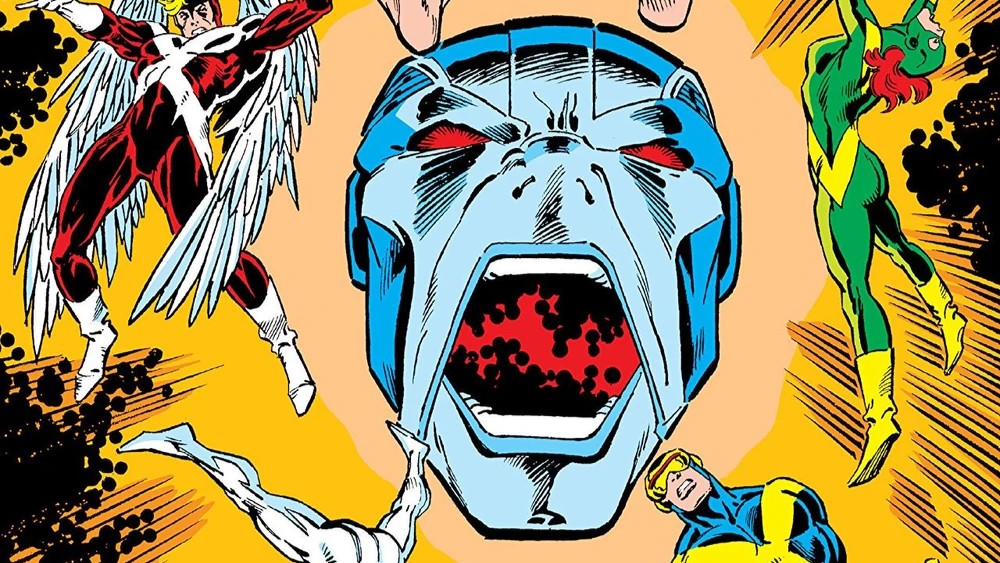
Though he doesn’t have the longevity of a Magneto or the personal connection to a hero of Sabretooth, Apocalypse is nevertheless one of the X-Men’s marquee antagonists. The motivating force behind one of the X-Men’s most beloved storylines, star of his own (not very good) feature film, and the current central villain of the second season of X-Men ’97, Apocalypse looms large over the X-Men narrative regardless of the medium. And yet, if not for a publishing quirk of fate, the character as we know him wouldn’t even exist.

Apocalypse’s first appearance (after a shadowy cameo in the closing panel of the previous issue) is in X-Factor #6, in which he’s revealed to be the leader of the Alliance of Evil, a sort of knock-off Brotherhood of Evil Mutants introduced in earlier issues of the series. While his motivations and look would be honed over the years, the gist of Apocalypse is on the page right from the start: purple-ish hue, weird lip outlines, hoses on his arms, big A on his belt buckle, a belief in the supremacy of the strong over the weak. And yet, X-Factor #6 is written by Louise Simonson, while it was Bob Layton, who launched the book with artist Jackson Guice just a few months earlier, who wrote the previous five issues and setup the mystery of the Alliance of Evil’s master.
Layton intended that master to be the Owl, a B-list (at best) Daredevil villain with Wolverine hair, claw-themed weaponry and limited flying ability. But when he left the book, editor Bob Harras gave the book to Simonson and asked her to replace the Owl with a new villain who could serve as X-Factor’s Magneto. She came up with Apocalypse (designed by Guice, who dropped him into that final panel of issue #5), and the rest is history.
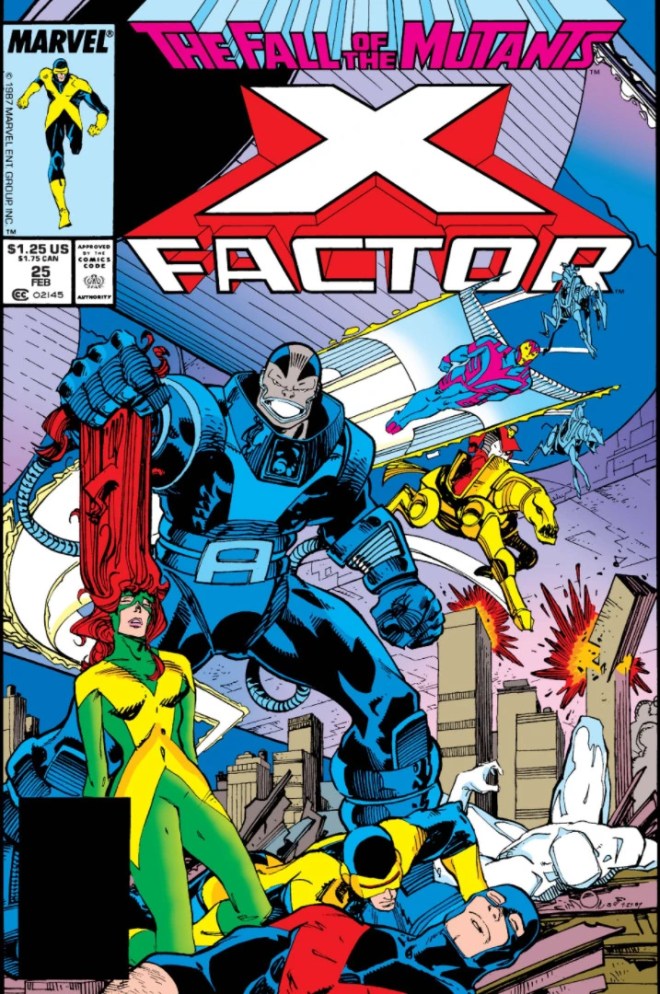
True to Harras’ desire for Apocalypse to be the Big Bad of X-Factor, he looms large over the first year or so of Simonson’s run, popping up in a series of subplot pages across multiple issues as he goes about assembling his first batch of Horseman — which includes secretly saving Angel from death and transforming him into Archangel. It all culminates in X-Factor‘s contribution to 1987’s “Fall of the Mutants” crossover in X-Factor #24-26, in which Archangel is revealed to X-Factor, the team stops Apocalypse and his Horsemen from culling the weak in New York, and claim his massive space ship base for themselves in the process.
Appropriately enough, Apocalypse serves as the antagonist of the final big storyline featuring the original version of X-Factor in X-Factor #65-68 (issues #69 and #70 would feature the original team, but as part of mini-crossover designed to setup the 1991 relaunch of the X-Books which saw X-Factor return to being X-Men while handing over the title to a new crop of characters). In the process, a new batch of Apocalypse henchmen are introduced, the Dark Riders (or Riders of the Storm as they’re called initially), one of the great ’90s Glup Shitto bad guy groups, and Apocalypse strikes one of his cruelest blows against X-Factor, infecting Cyclops’ young son Nathan with a techno-organic virus, forcing Cyclops to send Nathan into the future where his life could be saved (and thereby putting him on the path to becoming the time-traveling, gun-totting Cable).
Apocalypse spends most of the ’90s as a Big Bad trotted out for big crossover events, including “X-Cutioner’s Song,” which (sort of) reveals the truth about the origins of Cable and his evil doppelganger, Stryfe, “Onslaught,”, in which Apocalypse serves the familiar role of established heavyweight who lends legitimacy to the new bad guy by talking about what a heavyweight he is, and “The Twelve,” which culminates a long-gestating subplot about the future of mutantkind which mostly ignores all the setup to tell a story about Apocalypse getting a supercharged host body (that ends up being Cyclops for awhile) by harnessing the powers of twelve specific mutants.
But most notably is 1995’s mega crossover “Age of Apocalypse,” in which a time-traveling Legion tries to fix his relationship with his dad, Professor X, by killing Magneto in the past, but ends up killing Xavier instead. It leads to the creation of a reality in which — in the absence of Xavier — Apocalypse conquers North America in the name of mutant supremacy and pushes the world to the brink of nuclear annihilation before the “real” reality is restored. While Apocalypse himself doesn’t do a lot in the story, the sheer scope and commitment to the idea on the part of Marvel and the creators involved (all of the existing X-books were “cancelled” and replaced with alternate titles featuring the new alt reality versions of the X-Men set entirely in the new world created by Legion for four months) won it acclaim and abiding fan affection.
Apocalypse also featured in a trio of notable miniseries in the ’90s.
The first, The Adventures of Cyclops and Phoenix, focuses on Cyclops and Jean Grey raising Nathan/Cable for ten years in the future (after being pulled into that time by Mother Askani aka Cable’s half-sister from a different timeline — comics!), and features an Apocalypse at the zenith of his political power and the nadir of his physical power.
The Further Adventures of Cyclops and Phoenix sends the title couple into the past to explore the origins of Mister Sinister. Apocalypse factors into the story much less, but the connection between him and Sinister is established in that book.
And finally, Rise of Apocalypse goes all the way back to ancient Egypt to the birth of Apocalypse, and illustrates his discovery of the cosmic spaceship which enhanced his powers and led to his time as a ruler of Egypt. At least in its first few episodes, the second season of X-Men ’97 is drawing heavily from the first and third of those miniseries.

Following “The Twelve” and Cyclops’ ill-advised stint as the host of Apocalypse, the character spent most of the 2000s off the grid. His biggest story during this period comes in 2006’s “Blood of Apocalypse.” It’s features a new batch of Horseman largely culled from the ranks of the X-Men, including Sunfire, Polaris and — potentially important for this season of X-Men ’97 — Gambit.
After his defeat there, his next notable appearance comes in the inaugural arc of Rick Remender‘s Uncanny X-Force. Here, Apocalypse is revived following his abduction by the Celestials at the conclusion of “Blood of Apocalypse” in the form a child. In addition to introducing another batch of Horseman — the ones appearing in the first episode of X-Men ’97 Season 2 — it also concludes with Apocalypse’s apparent death in Uncanny X-Force #4.
Thus begins a long period in which Apocalypse is mostly off the board, making occasional one-off or flashback appearances but not really playing a starring role in any major stories. Remender returns to the character briefly in his Uncanny Avengers run, and the story immediately following the one that kills Apocalypse introduces his “son” Genesis aka Evan Sabanur, a clone of Apocalypse created by Fantomex in an effort to make up for killing the child — and potentially innocent — Apocalypse.
After a stint at the Jean Grey School for Learning and fighting alongside a group of X-Men, Genesis dies in the course of the killing-time-before-Jonathan-Hickman-arrives event storyline “Age of X-Man” (a sort of reverse-“Age of Apocalypse” in which Nate Grey appears to kill the X-Men but instead creates a seemingly-utopic reality for them). Shortly before that event, the “real” Apocalypse returns in a series of backup stories running across the five X-Men: Black one-shots, after which he gets embroiled in “Age of X-Man.” All of this is a setup for Apocalypse’s role in the X-Men’s “Krakoa Era.”
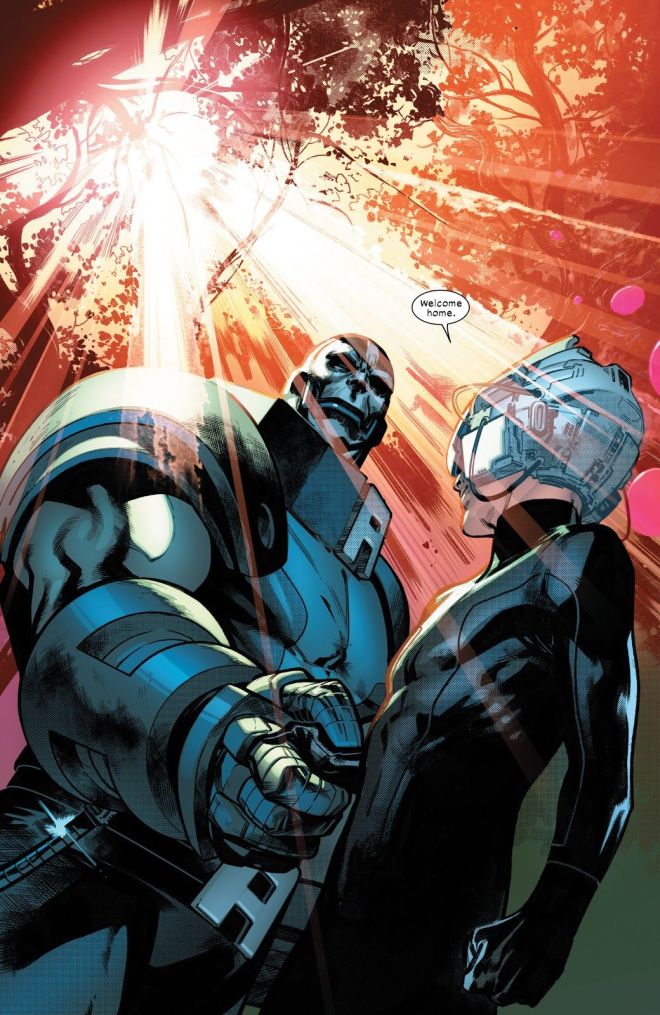
In his highest profile storyline in decades, Apocalypse becomes one of the key players in the Krakoa Era as a member of the ruling Quiet Council with a regular role in Excalibur. Taking the Krakoan name “▪︎-|A|-▪︎,” Apocalypse also served as a vehicle for the introduction of Arakko, the “sister” island of Krakoa and its resident mutants sealed off in another dimension named Amenth. Apocalypse goes on to lead the charge against Arakko in the “X of Swords” crossover, and ultimately gives up his seat on the Quiet Council to remain as a hostage in Amenth while sending Arakko and its mutants back to Earth (after which Arakko is resettled on a terraformed Mars).
Apocalypse eventually makes his way back to the Arakko-on-Mars version of the planet, where he helps the planet wage war against Orchis during the “Fall of X” in the waning days of the Krakoa Era. By the end of that era, Apocalypse somewhat returns to his more antagonist ways before returning to Mars, where he now believes the future of mutants to be, and naming Doug Ramsey his heir on Earth, using Celestial technology to transform him into Revelation.
Since then, Apocalypse has mostly receded to the background of the X-Men narrative once more. But between his starring turn in X-Men ’97 and the upcoming Tomb of Apocalypse miniseries, it’s only a matter of time before he makes his presence known once more.
