
Previously On X-Men: Contemporary Political Allegories Stop The Juggernaut in ‘X-Men’ #34
by Austin Gorton
Catching up on my backlog of X-Books, here’s all the notes and observations from a few weeks back, a pretty middling week overall.
Bishop #2
By Saladin Ahmed, Mario Santoro, Reese Hannigan, Federico Blee & Travis Lanham
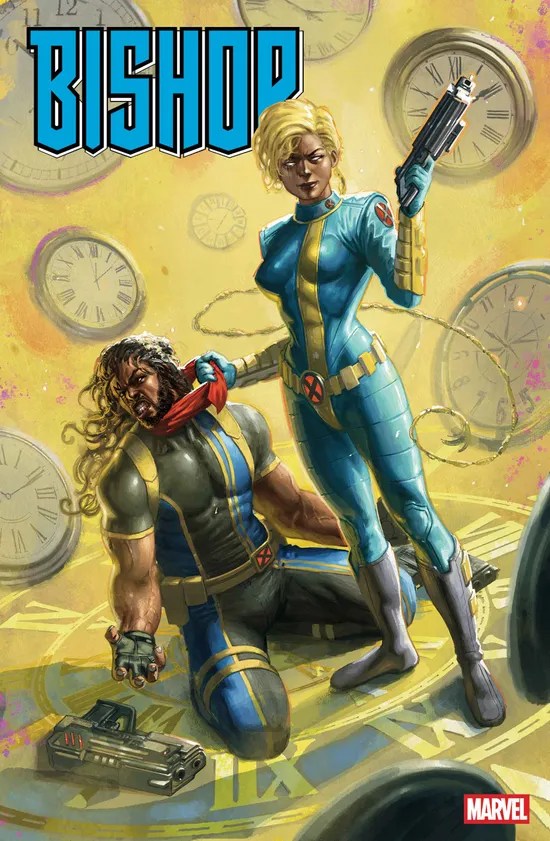
Shard arrives from the future to protect Bishop from the Final Brotherhood
- The Summers Rebellion was first mentioned offhand in Bishop’s earliest appearances. It was later chronicled in X-Factor (vol. 3) #41-50 (with a time-traveling Madrox and Layla Miller getting involved). As the name suggests, it involves an elderly Cyclops and his daughter Ruby Summers leading mutants in a rebellion against the humans oppressing mutants, leading to the formation of the XSE and a slightly better state of affairs for mutants.
- Flamequake mentions Mirrormind, who is presumably another Final Brotherhood member; I’m not sure what the “mirror” part indicates, but “mind” would imply one part of their amalgamation is inspired by Mastermind.
- It is kind of lame that Bishop never got a codename (and/or that “Bishop” was established as his surname, however you want to look at it).
- Skippingstone is a mashup of Blob and Toad (right down to wearing Toad’s jester collar).
A perfectly cromulent time travel story, with the tension as much about Bishop grappling with whether or not to warn his sister about her death (and/or how she is going to return to the future to play out her destiny) as the threat to Bishop from the Final Brotherhood (the best material in the issue is Bishop and Shard hanging out together), and I remain curious to see how the Final Brotherhood mashups are happening (since it’s not like Toad and Blob can procreate with each other on their own).
At the same time, it’s hard to care too much about these kinds of “travel to the past to change the future” kind of stories when its well established in the Marvel Universe that they just result in alternate timelines being created, something Bishop himself is all too keenly aware of (given he hails from a future in which Professor X was the X-Traitor who killed the X-Men, with the time-traveling Bishop preventing that from happening in this timeline).
Generation X-23 #6
By Jody Houser, Emilio Laiso, Erick Arciniega & Ariana Maher
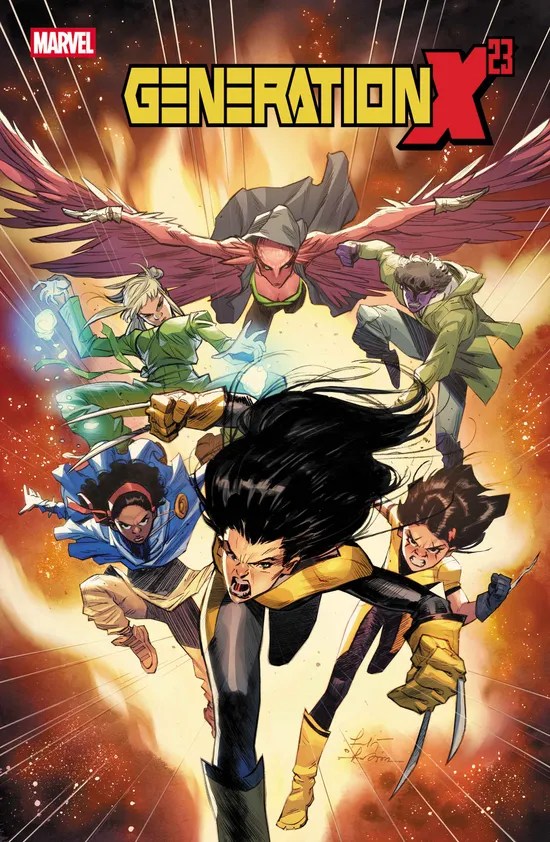
Laura and Gabby try to help the Generated settle into their new lives outside the Facility.
- X-66 (the one with wings) is on the cover, but not in the issue (since she stayed with X-Infinite at the end of the last story).
- X-74 takes the code name “Time Bomb”; in addition to being an early name for Boom-Boom that never took (she suggests it, but no one ever uses it) there’s also a member of 3K with the name Timebomb which seems like a case of editorial oversight.
- This issue is the first to really feel of a piece with the previous Laura Kinney: Wolverine series, with the characters back in Laura and Gabby’s home, visiting the X-Men’s former Treehouse base in Central Park to see if any mutants need help, etc. Plus, Jonathan is back!
- The “number 25 with chicken” Gabby and Laura order is their order from All-New Wolverine.
- Wolverine has broken claws, setting his appearance here during the current story in his solo book.
I’m still struggling to keep the various Generated straight (though giving them specific, non-numerical names will help), but I appreciate the effort to make this of a piece with Laura’s earlier series.
X-Men #34 – Book of the Week
By Jed MacKay, Greg Land, Jay Leisten, Fer Sifuentes-Sujo & Clayton Cowles
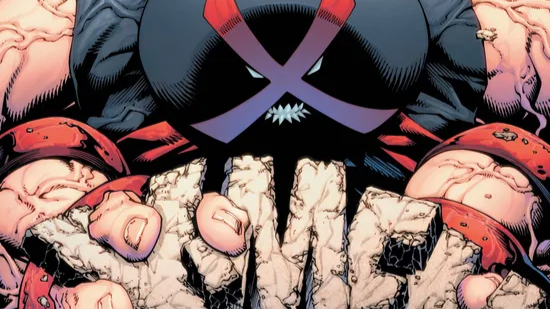
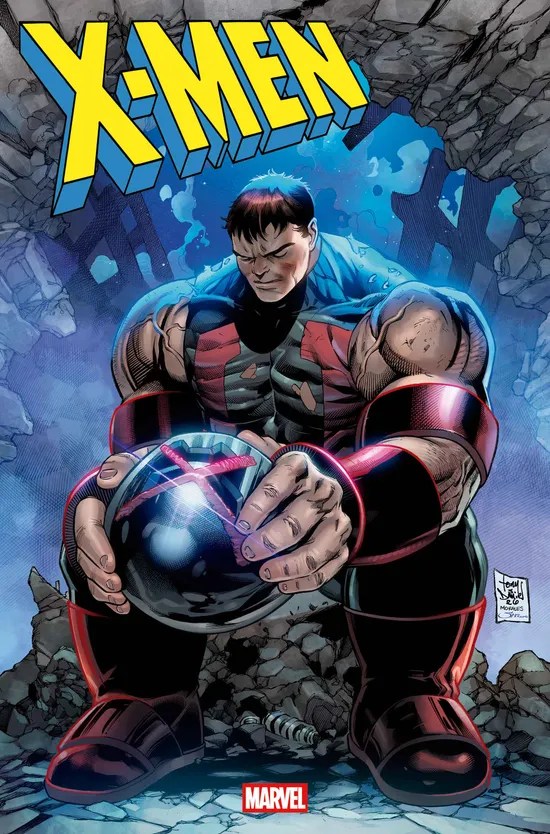
Juggernaut tries to destroy a statue of Sentinels creator Bolivar Trask.
- Greg Land was, unfortunately, something of a semi-regular artistic fixture back in the Utopia Era and again on the IvX-era Uncanny X-Men (the one with the inverted Sabretooth, Magneto, and Kwannon, and then on the short-lived Astonishing X-Men volume that brought back Xavier).
- Bolivar Trask debuted in X-Men #14 all the way back in 1965, right alongside his creations. He died two issues later (trying to stop his rogue creations), but his legacy lived in the form of his son Larry and the likes of Stephen Lang, who continued to develop Sentinels, and the general idea of the Sentinels as a physical representation of anti-mutant prejudice.
- Agent Lundqvist last appeared in issue #20 (when he was in jail with Cyclops).
- The whole statue of Trask and the arguments it inspires in this issue seems like a nod to similar statues venerating bad people/ideas, like Confederate monuments and the like.
- Similarly, Juggernaut not buying the parallel between his attempts to reform and the town of Juniper not wanting to be solely defined as the home of Trask sure seems like a shot across the bow of people who argue Donald Trump doesn’t represent America (because for an uncomfortably large number of people, he does).
- And Angie Harmon (who is presumably not meant to be the Rizzoli & Isles actress of the same name…) is largely spouting MAGA-coded rhetoric at Juggernaut.
- The line, “she sees what a terrible surrogate brother you are” is presumably referencing Illyana.
A solid check-in on Juggernaut’s mental state and his feelings about his status as a hero undone — as is usually the case with Land — by some truly unfortunate art.
X-Men Outback #2
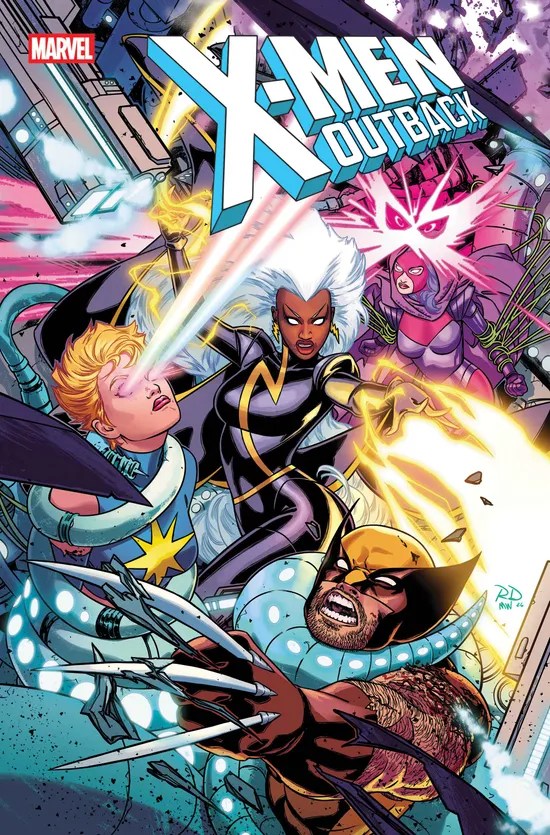
By Steve Orlando, Stephen Segovia, Alex Sinclair & Joe Sabino.
When Maddie accidentally awakens the last Reaver, Wolverine is forced to fight his teammates to stop him.
- The scenes of murder in the Mojoworld segment are from Uncanny X-Men #137 (death of Phoenix), Daredevil #181 (death of Elektra), New Mutants #60 (death of Doug Ramsey) and the flashback to Bucky’s apparent death that led to Captain America being frozen in ice for decades.
- This issue is set sometime after Uncanny X-Men #234 – Maddie knows about Scott & Jean, and Psylocke is in her armor – which also means that Maddie is the middle of her transformation into the Goblin Queen.
- Godshredder is a pretty dumb name, but I like the idea of bringing back the fourth Hellfire guard Wolverine attacked in X-Men #133, particularly with the other three (Cole, Macon, and Reese) established as Reavers already.
- However, Godshredder says that all the Reavers were originally Hellfire Club mercenaries, and that’s not true. For one, thing, there were dozens of them when the X-Men rousted the Reavers in Uncanny X-Men #229, and for another, even amongst the core group that comes to define the Reavers as the main consistent adversary of the X-Men in the Outback Era, there were several (Skullbuster, Pretty Boy, Bonebreaker) who weren’t affiliated with the club.
- It seems like Orlando is focusing on a specific character in each issue – last time it was Storm, here it’s Wolverine – with the Mojo stuff serving as something of a throughline, though with only five issues to work with, he’s going to either have to double up, or leave out some people.
The ideas of the “last Reaver” and Wolverine having to fight his way through the Outback team are decent, but the execution isn’t great. For one thing, he probably shouldn’t be able to take out the team this easily (it’s notable that Storm’s takedown happens off panel, and I’m not sure his defeat of Colossus makes much sense), and for another, whatever this is meant to say about Wolverine isn’t any different than any one of a hundred Wolverine stories, which makes it feel like its wasting it “dancing between the raindrops of continuity” premise.
