
Commentary: ’72 Hours’ Is A Missed Premise
by Frank Martin

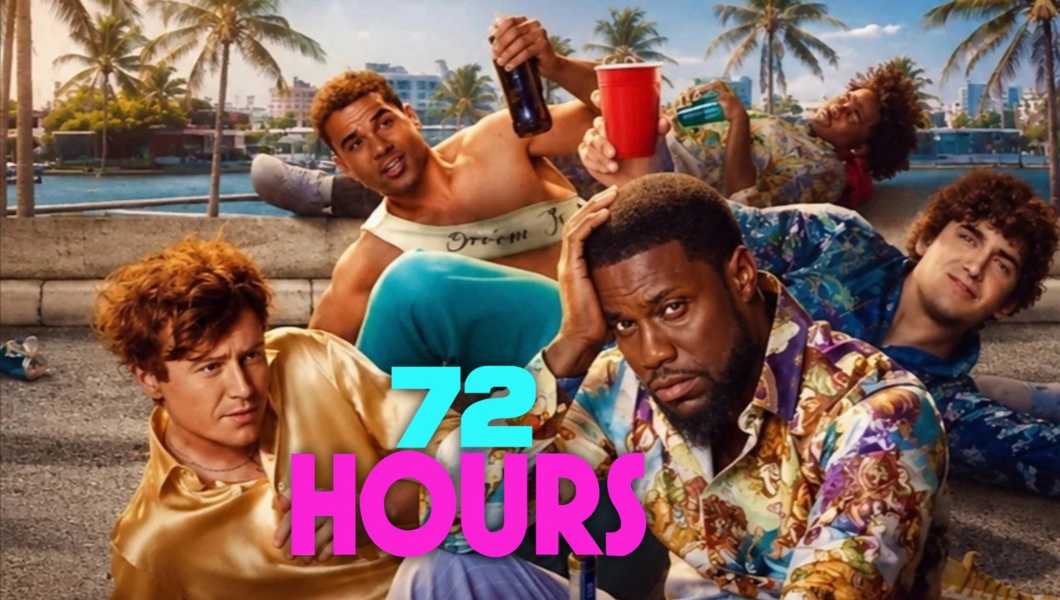
A great premise doesn’t necessarily mean a great story. The former is just an idea; it represents potential and the execution is everything. When a premise is established, there are many different roads to see it fulfilled. In the case of 72 Hours, it is fairly straightforward. The film intends to depict Kevin Hart‘s attempts at youthful partying with a bunch of 20-year-olds during a bachelor party. But the story took a very roundabout way to execute this, adding in a lot of unnecessary padding to fill the story. The result: a film that would have been much better if they kept everything as simple as possible.
Hart plays Joe, a marketing executive who struggles to capture an ad campaign targeting today’s youth. When he accidentally gets added to a group chat for Mason’s (Mason Gooding) bachelor party, he decides to take advantage of the situation and covertly film it as a commercial. Along the way, Joe uncovers a rift in the friendship between Mason and his best man, Nick (Marcello Hernández). Additionally, they get in hot water with Jaze (Michael Mando), a local drug dealer who believes Joe is moving in on his territory.
The film tries to be more than its premise, which is the key problem. Instead of simplifying the plot by focusing on Joe’s struggle to party, that aspect plays out over the backdrop of a covert advertising campaign. It also threw in a lot of awkward characterization to explain why a middle-aged man would hang out with younger adults. Then there’s that odd drug dealer subplot, which felt wacky and completely out-of-left-field. The film had a fine premise for Hart to do exactly what he does best, which is be ridiculous. Instead, the movie attempts more and ends up missing its entire point in the process.
72 Hours is now streaming on Netflix.