
Of Relationships And Vampires: Reviewing ‘The Vampire Slayer’ #14
by Scott Redmond
Overview
There is nothing more dangerous sometimes than unexplored baggage, something that ‘The Vampire Slayer’ dives deep into as the series nears its big upcoming conclusion. Anyone not reading this series needs to change that because it’s not only a love letter to the Buffy franchise but to comic books as a whole.
Overall
10/10Relationships. Often, they are the driving force in most of what occurs in our lives, both good and bad. Whether these relationships are familial, romantic, or of a friendly nature, they have a certain power over us.

When one is the Slayer, though, relationships are usually seen more as a potential liability.
One thing that always worked well in the Buffy mythos was how, unlike other Slayers, Buffy is a rebel. She forged deep and powerful relationships, surrounded and empowered by those she loved. From a father-like Watcher to a close-knit group of friends. It’s one of the elements that has made The Vampire Slayer such a powerful series. One that will truly be missed when it reaches a conclusion very soon.
It takes a particular type of writer to pick out the pieces of a beloved property and use it to build something new. Something daring, modern, deep, and fun without losing any of what came before. This series is not a replacement for all the Buffy stuff of before. It’s a loving tribute in many ways, showcasing that love in a unique way. Sarah Gailey is 100% that particular type of writer. She’s able to take that which we know and love and make it fresh once more.

We don’t even need an ounce of action to get something super enjoyable here. Of course, there is some action. The Slayers do some slaying, but it’s just an extra treat accompanying the main dish. That being not only the introduction of this universe’s Drusilla, but a whole lot of relationship conversations. People have baggage to unpack, and we get to unpacking. These days, we get plenty of superhero-related type stories that are full of punching and big action beats, sometimes with little character depth.
That’s all well and good, but give me a story like this one any day. All that juicy, deep, relatable character development and moments, that’s the most filling meal there is. It’s one of the things I loved about the original Buffy stories, and Gailey follows that tradition perfectly. A comic book that can spend most of its run full of characters talking and be fully compelling, that’s the ticket right there.
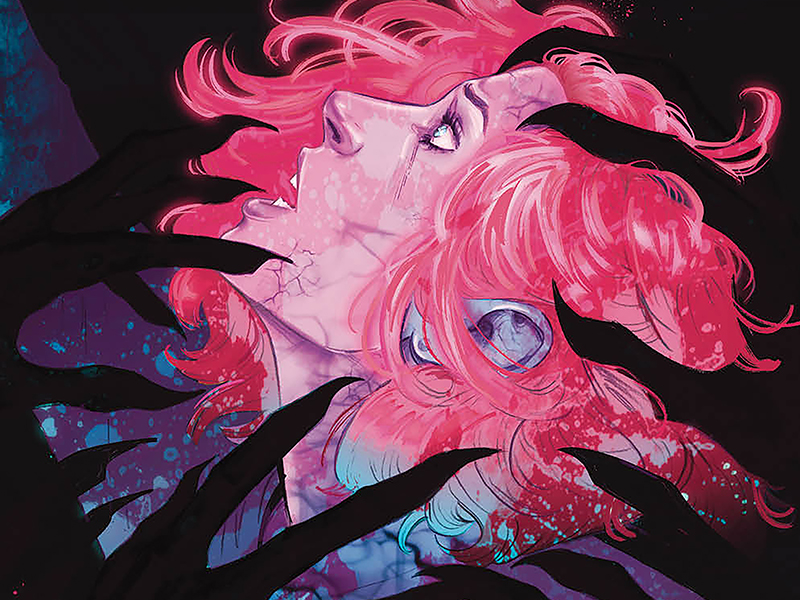
That’s not it, though. Each artist that has come on board has a great eye for these characters/this world and it’s a true delight. Kath Lobo has a detailed and deep style that is also heavy and light at the same time. It screams fun/whimsy while it also makes sure that we feel the tension/high emotions at any moment. We recognize these characters on sight without needing to see the actors that play them, we can feel the spirit that needs to be there.

I really love the way that Lobo chooses to frame things. We get a panel early on that is two separate panels, one inside and one outside, with Buffy crawling between them. That is just some true awesome great comic book stuff right there. It’s fun, logical, and one of the things that remind us how unique and visually distinct this medium can be.
All of this plays a huge part in how fascinating a more talkative/character-focused series continues to be. Lobo can make talking head panels distinct and deeper than just two characters talking. These characters are larger than life and they feel that way because of the great choices Lobo is making.
The same can be said for the colors that Valentina Pinto, with assistance from Ricardo Giardina, puts into play. Pinto has been on this series since the start and has brought the same level of energy to all the varying artistic styles that have graced the book. These colors shift and change accordingly, but always maintain the marriage of lighter and darker elements we get here. Shadows are always in play but there are smoother pops of color that highlight the characters and world. It plays into that fun but also heavy feeling I mentioned earlier.
Another element that always bears mention is the great eye for how light works. Each space, depending on its location feels very unique in color schemes because of what type of light, or lack of, we see happening. The darkened interior of the Bronze feels very cold and heavy with shadows. Which is far different from the slightly warmer but still cool more naturally lit darkness of the outside.

Capturing a particular energy on the page is a key element for all the artwork, including the lettering. On the show the voices of vampires often changed when they shifted forms, to match their more monstrous visage. This is one of many things that Ed Dukeshire brings to the page as the letterer. We get the more jagged and grayed-out bubbles for a changed vampire, mimicking that element from the show. Just one of many little details that mean so much in what Dukeshire is doing.
These letters, whether dialogue or SFX, tell us how to hear the story on the page. When played well these elements make sure that we are interrupting it correctly as we play it out in our heads. Whether it’s those bubbles or times where the bubbles of characters overlap (displaying an interruption) or even just colors, it all does so much.
The Vampire Slayer #14 is now available from BOOM! Studios.

