When You Should’ve Stayed Home: ‘Woman Who Came Back’ Reviewed
by Rachel Bellwoar
At the end of her commentary, film scholar Kelly Robinson notes that the biggest mystery Walter Colmes’ Woman Who Came Back leaves unresolved is why Lorna (Nancy Kelly) decided to come back to Eben Rock in the first place. Similarly, having seen Woman Who Came Back now, I can’t say it’s a film I’ll be watching again anytime soon, but it’s one that could’ve been great and which Imprint have supplied with some truly great bonus features.

The first sign of trouble comes when Woman Who Came Back begins with an exposistion dump. I’ve learned not to judge films on their opening voiceover narration because sometimes it’s not important. In this case, however, it’s indicative of how much Woman Who Came Back refuses to trust its audience and instead acts more like a soap than a film that’s only 68 minutes long, so viewers don’t even have time to forget anything. Information gets repeated constantly in Dennis Cooper and Lee Willis‘ screenplay, like did you know there’s a crypt under the church? We should visit that crypt – the one that’s under the church. Ebon Rock does not have that many crypts. There should not be this much confusion.
And, as someone who never remembers dates, I shouldn’t know Jezebel Trister was killed in 1645 but I do, because it was said a thousand times. This isn’t a film where the year matters.
On paper, Woman Who Came Back should be fantastic. There’s even a literal cackling witch (Elspeth Dudgeon). That’s Jezebel – or at least the woman who’s been possessed by Jezebel’s 300 year old soul. Jezebel was killed for allegedly being a witch (in 1645) but, before she was killed, Jezebel made a deal with the devil so she could take revenge on the judge who sentenced her to death. Lorna, as the descendant of that judge, has decided to return to Eben Rock right around the anniversary of when this all went down.
As mentioned earlier, it’s unclear why she decided to come back, but it is obvious why she decided to leave – the townsfolk hate her and as soon as bad things start to happen they’re more than happy to blame Lorna. Except for Lorna’s know-it-all, All-American ex-fiancé doctor (John Loder), of course. He’s still carrying a torch for her and it’s just a given that their engagement will be back on now that she’s back.
All Colmes and the actors would’ve needed to do to make Women Who Came Back more successful is allow the film to be spookier and atmospheric, like when Lorna finally gets fed up with the dog that’s been following her and moves to attack him. That should have been an extremely dark and unsettling moment, but there’s always a lightness and silliness to the proceedings that undercuts the horror. Like when there’s a bus crash at the very beginning of the movie and you’d barely know a bunch of people died. The horror of that accident should’ve never been lost.
With regards to the bonus features, writer and musicologist David Huckvale talks about the film’s composer, Edward Plumb (who worked a lot for Disney), and his use of tritones, and is the first to point out that “Eben” is Hebrew for “rock,” making the town’s name, “Rock Rock.” Author Joseph Dwyer provides a video essay in which he compares the film to René Clair’s I Married A Witch and looks at buses in witch movies. Robinson’s commentary (in this reviewer’s opinion) is better than the film itself. From touching on the decision to set the film on Halloween to the (in)accuracy of claiming witches were burned at the stake during the American witch trials, it’s such a detailed commentary that provides insightful background on all the cast and crew. The dedication, too, like when Robinson digs into the origins of a prop book, questions why there’s a monkey man statue in the crypt, or investigates why the film isn’t called “the woman who came back,” shows great detective work and a real love for movies, even films that might not be perfect like Woman Who Came Back.
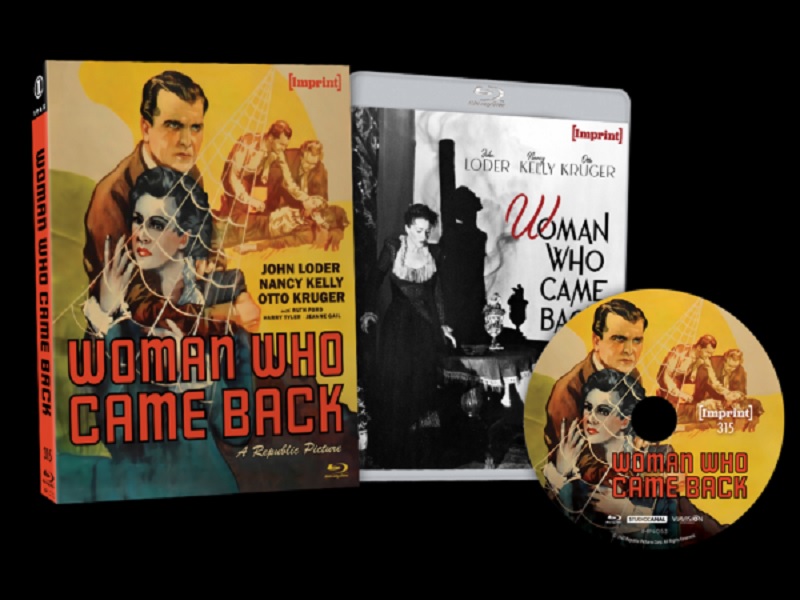
Woman Who Came Back is available on region-free Blu-ray from Imprint Films.