
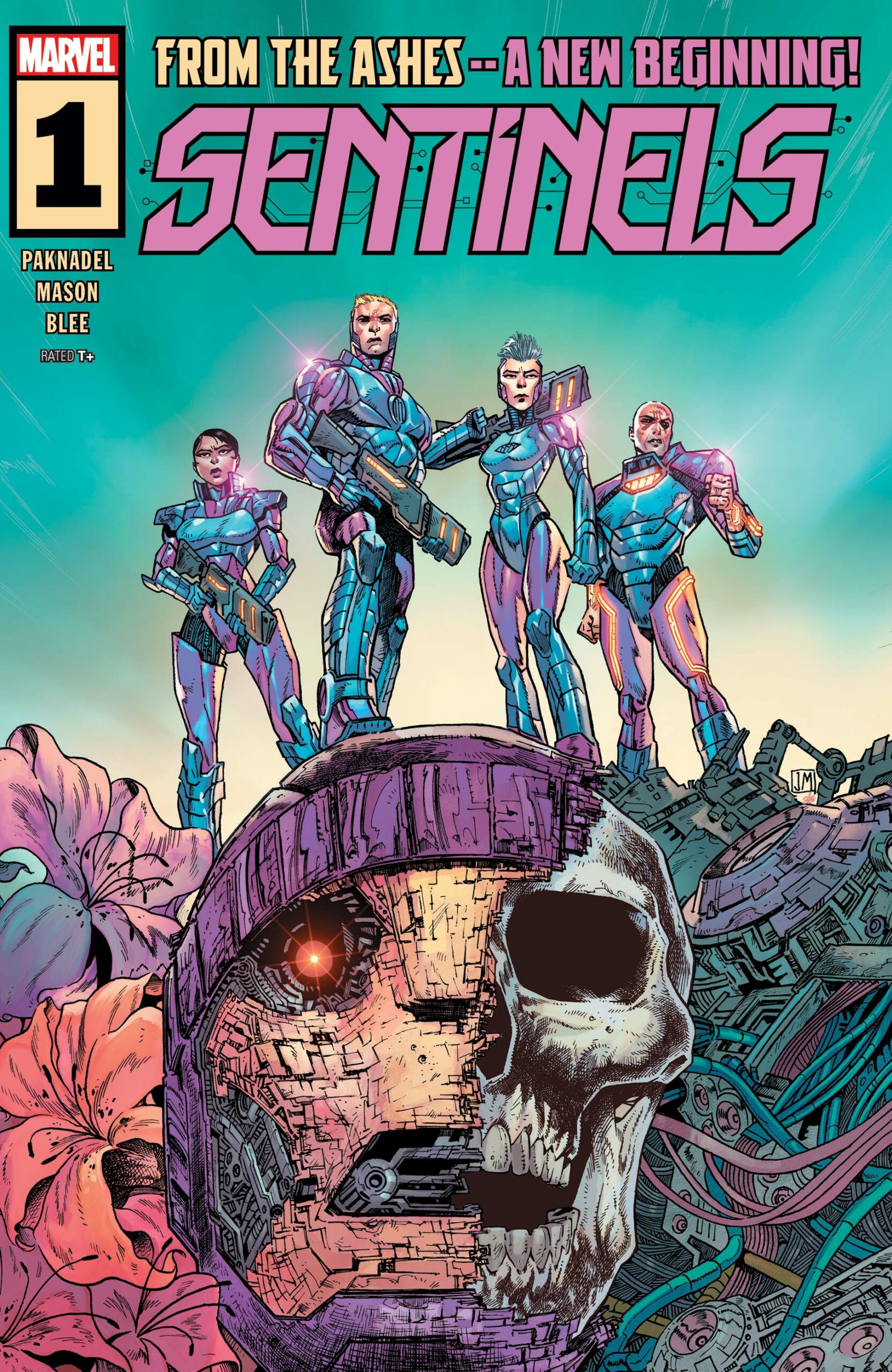
Review: ‘Sentinels’ #1 Makes For A Complex And Compelling Start
by Austin Gorton
Overview
A complex setup with no easy outs combined with a sense that the book is part of a larger narrative whole makes Sentinels #1 one of the stronger “From the Ashes” launches.
Overall
8/10The From the Ashes march continues, as the seemingly never -nding stream of new titles continues apiece. Sentinels #1 is the latest series to launch as part of its banner. It stars no established characters as part of its main cast; aside from a pair of X-Men villains (and a third in a last page reveal), the character in this issue who has made the most previous appearances in an X-Men book dates to the late 1960s. Yet for all that, the issue represents one of the stronger From the Ashes launches for two key reasons.
First: it is one of a rare number of new books that actually feels like it exists in the same universe as at least one other X-book. Aside from a couple tense phone calls between Cyclops and Rogue in Uncanny X-Men and X-Men, most of the From the Ashes books seem to exist in their own little pocket universe. In Sentinels #1, the main characters are explicitly tied to the group running the X-Mansion as a prison over in Uncanny X-Men. Nothing established there is critical to understanding or appreciating this comic, but knowing the connection between the two books helps this new publishing initiative feel like an actual shared narrative for the first time instead of just a random collection of books featuring characters who used to hang out together. This “stands on its own but also is a piece of a broader narrative tapestry” evokes the best of the Krakoa Era X-titles, a sensibility that has been sorely lacking since the end of that era.
More importantly, Sentinels #1 succeeds thanks to the complex circumstances of its characters. The core cast are all new characters with names like G.I. Joe characters (“Shellback”, “Sawtooth”). Something only hinted at here — but heavily publicized in the pre-release — material is the fact that all have been injured in some kind of big superhero event crossover (like “Onslaught” or “War of the Realms“). In order to overcome their injuries, they’ve become human/Sentinel cyborgs. That their motivation is, ultimately, self-serving is key to making them sympathetic. They’ve traded their humanity not for the power to destroy mutants, but for liberty; the freedom of movement or action denied them by their injuries. This isn’t a book populated by bigots who hate mutants and have sold their humanity to exterminate them, it’s a book about complex people who felt a call to service, paid a steep price for it, and then paid an even steeper price to settle their debts.

This is a book not with heroes and villains, but with protagonists and antagonists. Writer Alex Paknadel is precise in the use of the story’s antagonists. The mission which opens the issue involves the Sentinels hunting down Omega Red. While the character received something of a redemptive arc in the Krakoa Era X-Force (although nearly any traditional villain would look good standing in the shadow of that book’s Beast), he is still someone who committed some extreme crimes (you don’t get to deploy something called a “death factor” and not end up wanted for murder). Thus, the first mission of the Sentinels doesn’t involve them hunting down innocent, helpless mutants. Instead, their target is a mutant for whom the world would probably be better if he was under some kind of control. Here, there’s a pretty clear “Sentinels = heroes/Omega Red = villain” dynamic in place.
Yet later in the issue, Paknadel complicates things. It’s made clear that the organization to which the Sentinels belong is not an altruistic one, even if their first mission serves a greater good. Blob is in custody and is being tortured to some end. He is one of the oldest X-Men villains on paper, debuting in only the third ever X-Men comic book. Yet, even moreso than Omega Red, he had his villainous edges sanded down during the Krakoa Era, becoming the beloved bartender of the Green Lagoon tiki bar. Even if he was a badder guy at this point, it would still be tough to watch him come running out of his cell crying out “Stop hurting me!” and not have negative feelings about the Sentinels and their mission. Suddenly, the earlier clear-cut division between hero and villain has become a lot more muddied.

Between its deployment of “villains” relative to the protagonists of the book — as well as the immediate complexity in the relationship between the Sentinels and their enhancements — it’s clear from Sentinels #1 that the series intends to stake out an area of complicated morality and sticky questions about humanity. At the same time, unlike most of the other current X-books, it’s not doing that entirely in a vacuum. Rather, this is a series with a direct tie to another From the Ashes book, making it part of a larger narrative tapestry, and is all the stronger for it. The end result is one of the better initial offerings from the X-Men line in the new publishing initiative.

