
Commentary: ‘A Knight Of The Seven Kingdoms’ Plants Seeds Of Rebellion
by Frank Martin

Stories tend to happen very quickly. This is because pacing is important. Audiences want to see a beginning, middle, and end to an arc within a reasonable amount of time. But this isn’t how history unfolds — it takes time to evolve. Generations pass between plot points, especially in terms of rebellion. A Knight of the Seven Kingdoms handles this subject masterfully. Any Game of Thrones fan knows that the show starts after the Targaryens are overthrown. However, A Knight of the Seven Kingdoms takes place while they are still in power, but the series plants seeds of the growing rebellion to give fans a hint of what’s on the horizon.
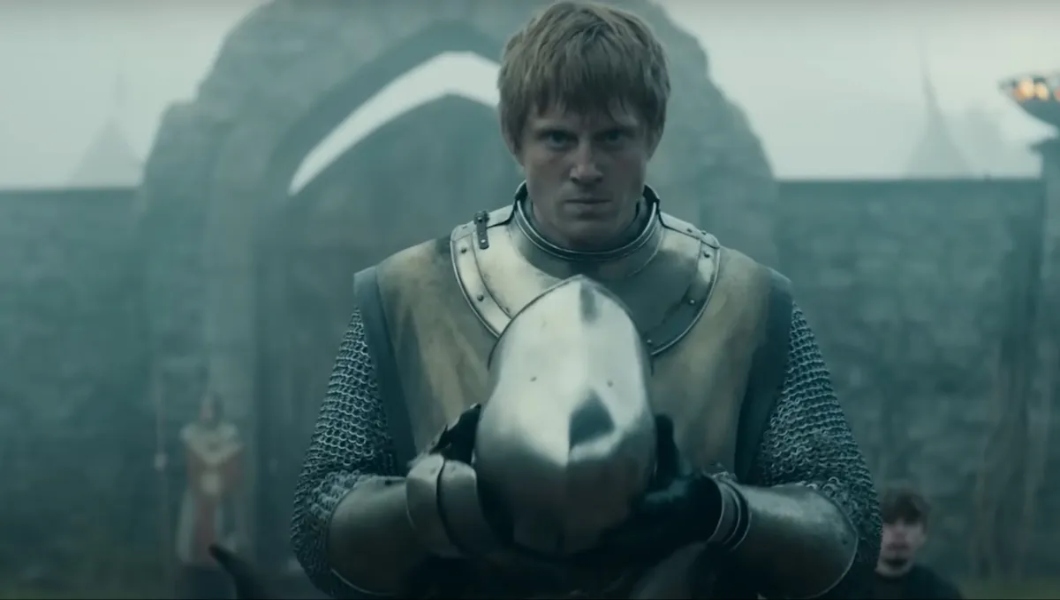
The program follows a pivotal moment in the life of Ser Duncan (Peter Claffey). After the death of his mentor, Ser Arlen (Danny Webb), Duncan — aka Dunk — moves from becoming his squire to a knight of his own. He heads to a tournament in the hopes of finding a job working for one of the great houses. Instead, he ends up punching Targaryen Prince Aerion (Finn Bennett) in order to protect an innocent. This lands Duncan in the middle of political turmoil that results in a trial by combat consisting of fourteen knights, one of which is Ser Lyonel (Daniel Ings) of House Baratheon.
It won’t be immediately apparent to those who aren’t familiar with Westeros history, but Ser Lyonel’s ancestor will go on to become the new King of the Realm after the Targaryens are overthrown. At the point the show takes place, the Targaryens have been in power for a while, but they no longer have their dragons to induce fear in the other houses. There is a growing resentment and discord among the population of Westeros; they are tired of the Targaryens. Of course, revolution doesn’t happen overnight. It takes decades for discontentment to stew until the moment for revolution is ripe. So Game of Thrones fans will get a kick out of seeing hints of what’s to come.
A Knight of the Seven Kingdoms is now streaming on HBO Max.


