
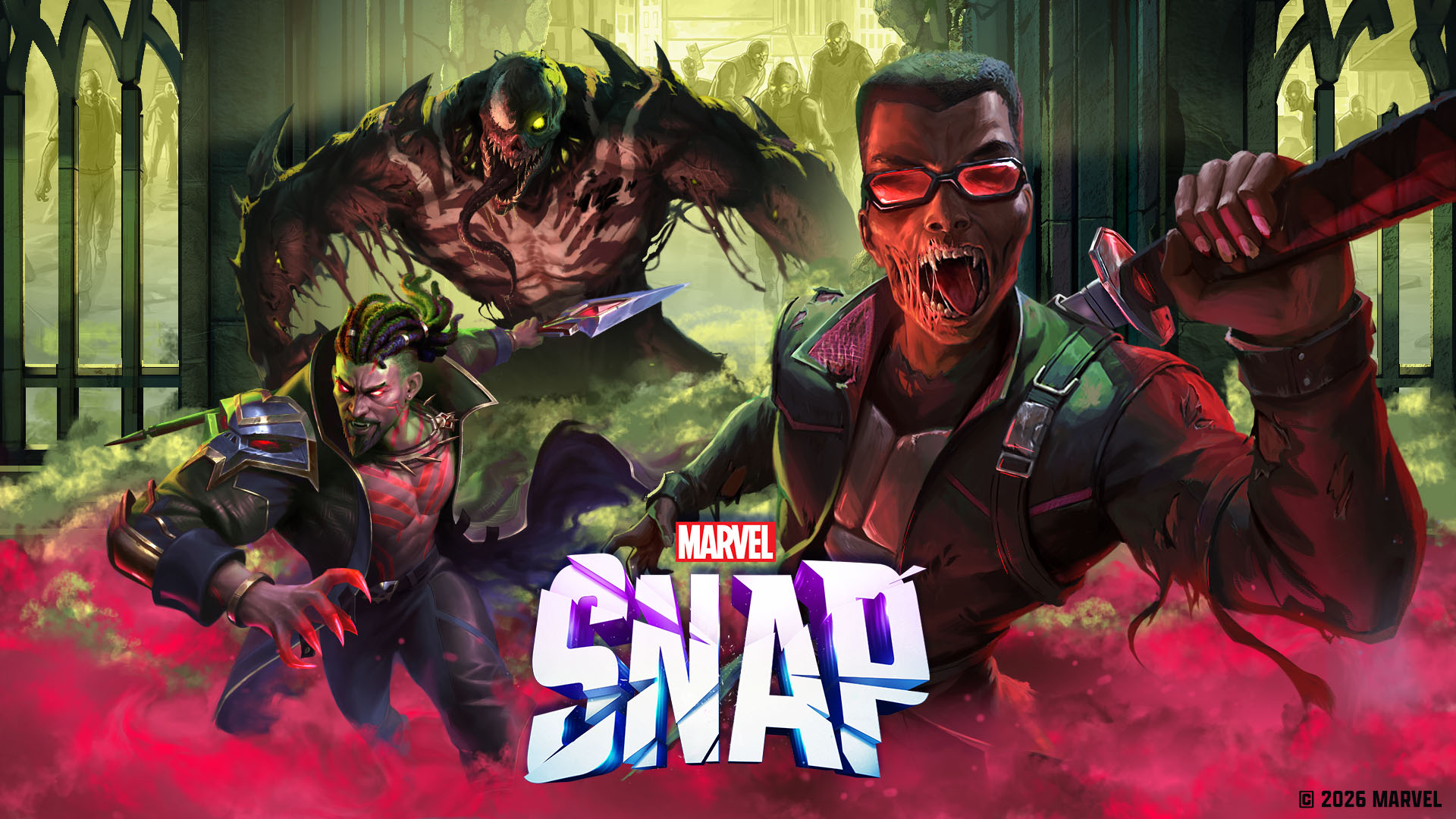
Snap Into Marvel: It’s Vampires vs. Zombies — Whomever Wins, New Characters Lose
by Austin Gorton
New month, new season of Marvel Snap. And because the new month is October, it’s a zombies vs. vampires-themed season. Yet following in the footsteps of the previous two seasons, the Random-ass Cowboy Thanos season and the AXIS Inversion season (which at least had a grounding in a specific comic book event), it is once again populated almost entirely by new version of random existing cards. As with “Fractured Frontier” and Marvel Western characters, this is especially disappointing given that Marvel has a rich vein to tap of vampire and zombie characters (to say nothing of general supernatural characters) from which to draw inspiration.

While Marvel Snap already features such notable vampires as Blade, Morbius and Dracula, there are plenty more to choose from. Bloodline, Blade’s daughter. Victor Strange, brother of Doctor Strange. Baron Blood, the Nazi vampire who Captain America killed. Spitfire, the Golden Age heroine turned into a vampire by Baron Blood. Dracula’s dumb kid Xarus. Hannibal King, a contemporary of Blade and Deacon Frost from Tomb of Dracula.
Even if Second Dinner is hellbent on rerunning existing cards for whatever reasons, there’s Bloodstorm (vampire Storm from Mutant X), Vampire Wolverine from that What If? issue where he became Lord of the Vampires. Heck, Sam Wilson’s falcon Redwing is partially a vampire after being bit by Baron Blood. Does the game need another Redwing card? No, but a Vampire Redwing would at least have more basis in comics lore than Vampire Killmonger.
Zombie-wise, the comic book pickings are a little more slim, but offer more opportunities for reruns at least drawn from specific comic events. There’s Simon Garth, the original Marvel Zombie, who headlined the ’70s Tales of the Zombie series. Wonder Man & Vision’s brother Eric is the Grim Reaper, who is technically a zombie. Then there’s the various iterations of the Legion of the Unliving, a villainous team assembled by various people (including Grim Reaper occasionally) composed of various dead heroes and villains resurrected as subservient zombies. Everyone from Bucky to Drax to Dracula himself has been on a Legion of the Unliving.

And yet, what we got is [checks notes] Vampire America Chavez? Zombie Black Cat? Are they just flinging darts at a board now?
Anyways, let’s break ’em down.
Vampire Killmonger: The Season Pass card, Vampire Killmonger is honestly a clever adaptation of the original Killmonger’s ability. Where the OG throws knives/spears that kill cards, this version throws spears that suck power from cards for Killmonger’s benefit, which is a pretty spot-on representation of what vampires do.
Zombie Blade: Well, Blade is already a vampire, so he gets a zombie variant for the event (and yet we still have no card, variant or otherwise, featuring Blade with his original 1970s look). Like Vampire Killmonger, Zombie Blade steals power from your opponent (he’s still a vampire, after all), but then feeds it to the zombie horde rather than himself.
Zombie Venom: The recent “Venom War” storyline involved a rival Venom introducing a strain of alien symbiotes who turned their hosts into Venoms AND zombies, but as far as I know, there is no specific zombie version of Venom featured in that story. Nevertheless, here is Zombie Venom, who does what OG Venom does (destroy cards) with the added twist, like Zombie Blade, of empowering the horde as well.
Vampire Enchantress: This card doesn’t seem to be adding a zombie or vampire riff to the original Enchantress’ card ability. Instead, it’s deploying the relatively new “do something based on the variety of card costs in play” mechanic (also seen in Kluh last season). Whereas the alt Killmonger, Blade and Venom are clever twists on their OG abilities, this feels like an ability in search of a character, with Enchantress getting pulled out of a hat for that purpose.
Zombie Nova: This one keeps the “empower the horde, riff on previous card ability” approach. Poor Nova still has to be destroyed to empower other cards (or in this case, the horde), but at least this version adds something on reveal, too.
Zombie Black Cat: Eschewing the “empower the horde” mechanic, this card doubles down on the original’s place in Discard decks. There’s a lot going on here. The double discard effect (discarding a card when it gets discarded) seems new, while the “jump to a location” bit seems like a play on Proxima Midnight. How all that relates to Black Cat (a thief who sometimes has bad luck powers) is unclear, but that’s true of the original Black Cat card too.
Vampire Deacon Frost/Crimson Behemoth: The one wholly original character debuting this season, Deacon Frost first appeared in Tomb of Dracula #13 (July 1973). He became a vampire via science (accidentally injecting himself with vampire blood), and as a result, developed an unusual ability to create a doppelganger wholly subservient to him of everyone he turned into a vampire (the ability to create a whole bunch of copies of something sure seems like an easy thing to adapt for Marvel Snap, but here we are). He battled Dracula for the position of Lord of the Vampires, and is responsible for turning both Hannibal King and Blade into vampires.
This whole “transform into the Crimson Behemoth” thing is an invention of the game, but the idea of Deacon Frost being empowered by other cards stealing power, and then stealing a bunch more power in his powered-up form, is a clever representation of someone who sought to be the Lord of Vampires.
Vampire America Chavez: Finally, we have perhaps the most random vampirization of a character of the season. The card’s ability is pretty solid though, in terms of putting a vampire spin on the regular Chavez ability, adding power to the next card in your deck, but this time by stealing it from your opponent (sidebar: remember when America Chavez had 9 power and the ability to always be your turn 6 draw? I miss those days).