
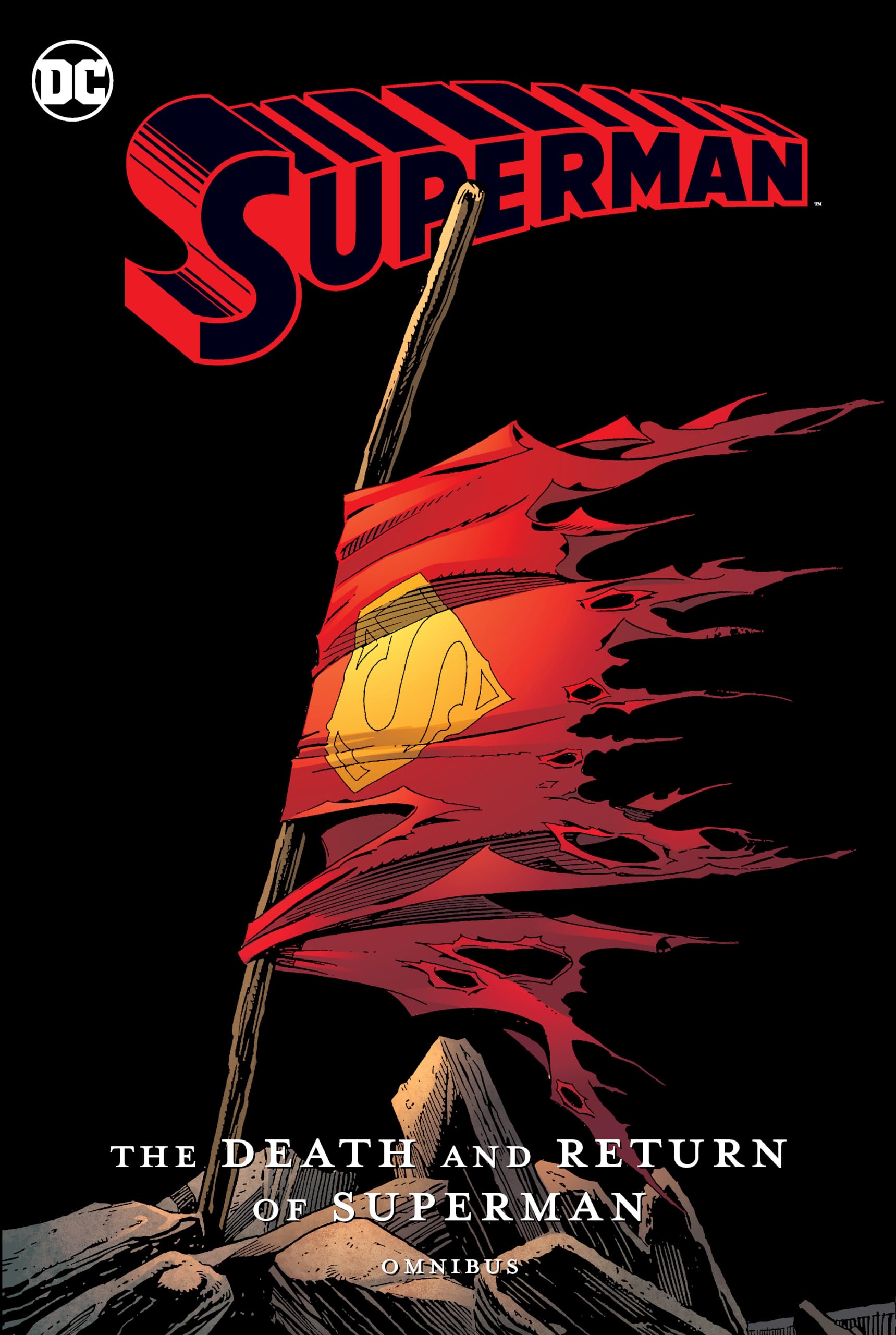
Superman Day: ‘Death & Return Of Superman’ Remains A Storytelling Marvel
by Tony Thornley
Thirty-three years ago, the world’s greatest superhero died. The storyline was a pop culture phenomenon, as mainstream news media reported on each turn of the story. Now, even decades later, Death & Return of Superman remains one of the greatest superhero stories of all time.

The storyline started in issues dated December 1992 (actually around September) and ran through the following autumn. The story ran through the height of what’s known as the Triangle era- a time when four Superman titles were running at once, and formed essentially a weekly soap operatic superhero epic, which you could track thanks to a numbered triangle on each cover. The story was chronicled by a massive cadre of writers and artists- Dan Jurgens, Roger Stern, Louise Simonson, Jerry Ordway, Karl Kesel, Jon Bogdanove, Dennis Jahnke, Butch Guice, Dennis Rodier, Tom Grummett, Doug Hazelwood, Brett Breeding, Glen Whitmore and Bill Oakley covering most of the event with many others pitching in to help across tie-ins, specials and back-ups.

The origins or the story are well-documented. Originally the event that fall was intended to be the wedding of Lois Lane and Clark Kent, but the launch of Lois & Clark: The New Adventures of Superman delayed the duo’s nuptials. So the writers and editors of the Superman line quickly pivoted.
And the story was epic. It was actually split over four parts- Doomsday/The Death of Superman, Funeral for a Friend, the Reign of the Supermen, and the Return of Superman.
Beginning with a brawl between Superman and a mindless force of destruction (because you could barely call him a villain) known as Doomsday, the story found Superman up against impossible odds. The monster would not stop, and shrugged off almost every other hero that faced him, including the era’s Justice League. Finally Superman realized that his only chance was to fight the monster until one or both of them were dead, resulting in the final blow steps away from the Daily Planet as Superman and Doomsday both fell.


From there, the repercussions of the death of the world’s greatest hero rippled through the DC Universe. The Justice League considered what was next. Lex Luthor tried to position himself as the new protector of Metropolis. And Clark Kent’s loved ones battled their grief and all the outside forces fighting over Superman’s remains and his legacy.
Then four Supermen each arrived on the scene, either claiming to be Superman reborn or fighting to hold the legacy of the Man of Steel. Unfortunately, one of them lied to the world, and was actually a crazed villain, seeking to take over the earth. And the only man who could stop him is the actual reborn Superman…
It was a huge story. But not only that, it’s one of the greatest superhero epics ever told. Week after week, readers were able to tune into see Superman in the greatest fight of his life, what life in Metropolis was like without him, or to see exactly what happened with each of the four Supermen. It was a story that showed that Superman was still relevant, that he was the greatest hero on the planet, and what his legacy meant.

Behind the scenes though, it was a remarkable achievement. It delivered each and every week, with consistent art and storytelling. It showed the entire comics industry what could be done- setting the stage for a format that was imitated by Batman, Spider-Man and the X-Men all at one point or another. It also established multiple characters that are still staples today, such as the Conner Kent Superboy and Steel, while proving others had traction. Supergirl as a concept likely would have faded into obscurity if it wasn’t for the era’s version standing front and center in the story.

It’s the Superman story all others since have aspired to be. It captures what’s great about the hero, and in a story that he’s dead for over half of it. This is what Superman can and should be.
