
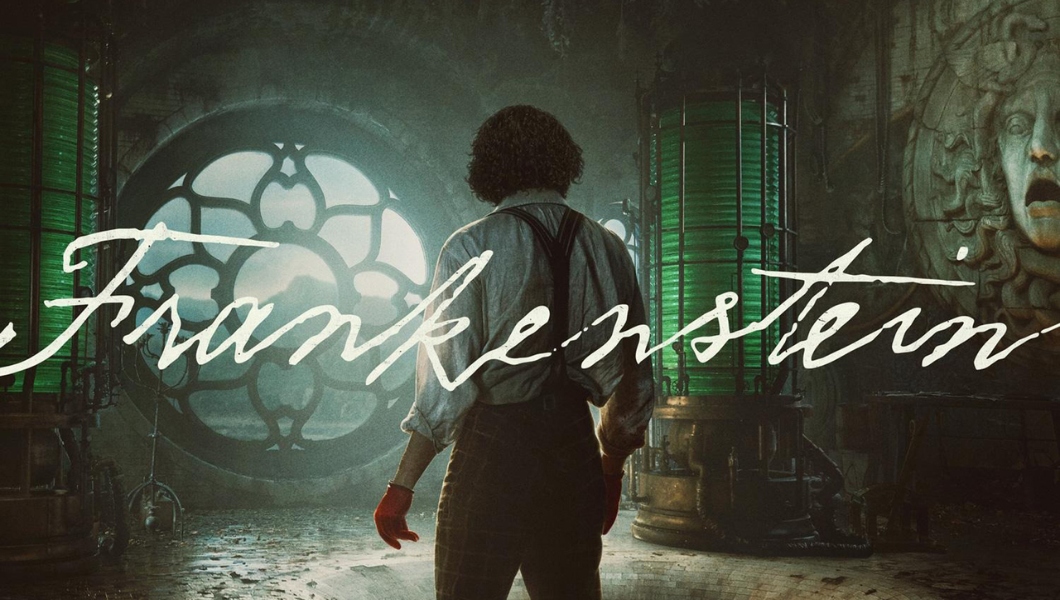
Commentary: Guillermo del Toro’s ‘Frankenstein’ Is A Visual Treat
by Frank Martin

So many films these days try to become as grounded and realistic as possible. Filmmakers want to set their stories in a realistic world that can resonate and feel familiar to audiences. However, there’s also something to be said about elevating a movie into the realm of the fantastical. This doesn’t necessarily have to be through story. It can be achieved via cinematography, set design, costumes, lighting, and any other tool available to a filmmaker. While many have tried to give a more grounded approach to Mary Shelly‘s Frankenstein, Guillermo del Toro decided to frame the movie almost like a visual fairy tale. In this way, the film is an absolute treat for the eyes.
The movie is broken up into two main parts. The first follows Victor Frankenstein (Oscar Isaac) as he seeks to conquer his father’s disapproval by finding a means to conquer death. He becomes a brilliant scientist who’s been shunned from the medical community for his controversial experiments. Victor stitches together body parts in order to bring them back to life. The second part picks up after he succeeds to create life in the form of a creature (Jacob Elordi), who Victor deems a failure. After escaping captivity, the creature tries to find a peaceful place in a violent world, which ultimately leads to him clashing with Victor with deadly results.
Right from the beginning, it’s very clear that del Toro took great pains to light the movie and make it stand out. With elegant costumes and vibrant colors, every frame stands out like a painting. There have been many attempts to adapt Frankenstein, and many of them focus on making the film as dark and grisly as possible. This version does the opposite. It leans heavily on the fantastical nature of this science fiction epic. Regardless of how one views the story and its characters, it’s hard to argue that the technical and visual aspects of the film aren’t delightful to see.
Frankenstein is now streaming on Netflix.
